Planning a trip and unsure which Brittany castles are worth the detour? Start with Fougères, Josselin, Suscinio and Combourg: four medieval strongholds across Morbihan and Ille-et-Vilaine, each with a distinct story.
Brittany is one of the french chateau regions worth exploring on its own terms.
| Item | Value |
|---|---|
| Château de Suscinio | Restored from ruin after 1965 |
| Château de Josselin | Four of the original nine towers remain |
| Château de Fougères | Two hectares |
| Château de Kerjean park | 19 hectare |
| Château du Taureau | Redesigned by Vauban in 1689 |
| Château de Vitré | Restored from 1875 |
The figures come from Wikipedia’s list of castles in Brittany and a Belles Demeures feature on Breton châteaux. They can change, so check the source before you rely on them.
Which Brittany castles are on the list?
The list of castles in Brittany on Wikipedia covers medieval castles and château forts in western France. It sorts them by département, which makes a handy way to organise a trip.
- Côtes-d’Armor: Dinan, Fort-la-Latte, La Roche-Jagu and Tonquédec.
- Finistère: Brest, Kerjean, Kérouzéré and Taureau.
- Ille-et-Vilaine: Combourg, Fougères, Vitré and Saint-Malo.
- Morbihan: Josselin, Suscinio, Pontivy and Trécesson.
Condition varies widely. As of the list’s last edit on 9 October 2026, Guildo and La Hunaudaye are marked as ruins, and so is Tonquédec, according to the same Wikipedia page. Expect weathered stonework there rather than restored interiors.
Morbihan: ducal and noble strongholds
The Château de Suscinio stands in Sarzeau, on the peninsula of Rhuys, and was a residence of the Ducs de Bretagne, says Belles Demeures. The same feature notes that it overlooks the seashore.
Its restoration came late. Wikipedia’s list says it was restored from ruin after 1965, while Belles Demeures says renovation started in 1966, so treat the exact year with care.
What you see today is a fortified ducal home with three towers, a curtain wall, a drawbridge and a decorative chapel, as Belles Demeures describes it.
Josselin has a harsher history. It was partially demolished in 1629 on the orders of Cardinal Richelieu, and only four of the original nine towers remain, according to Wikipedia’s list.
Built between the 11th and the 16th century, the château has been the residence of the Ducs de Rohan since its construction, Belles Demeures reports. It adds that a jardin à la française and an English style parc surround it.
Further north in the département, Pontivy is listed as intact and is also known as the Château des Rohan, per Wikipedia.
Ille-et-Vilaine: castles beside medieval towns
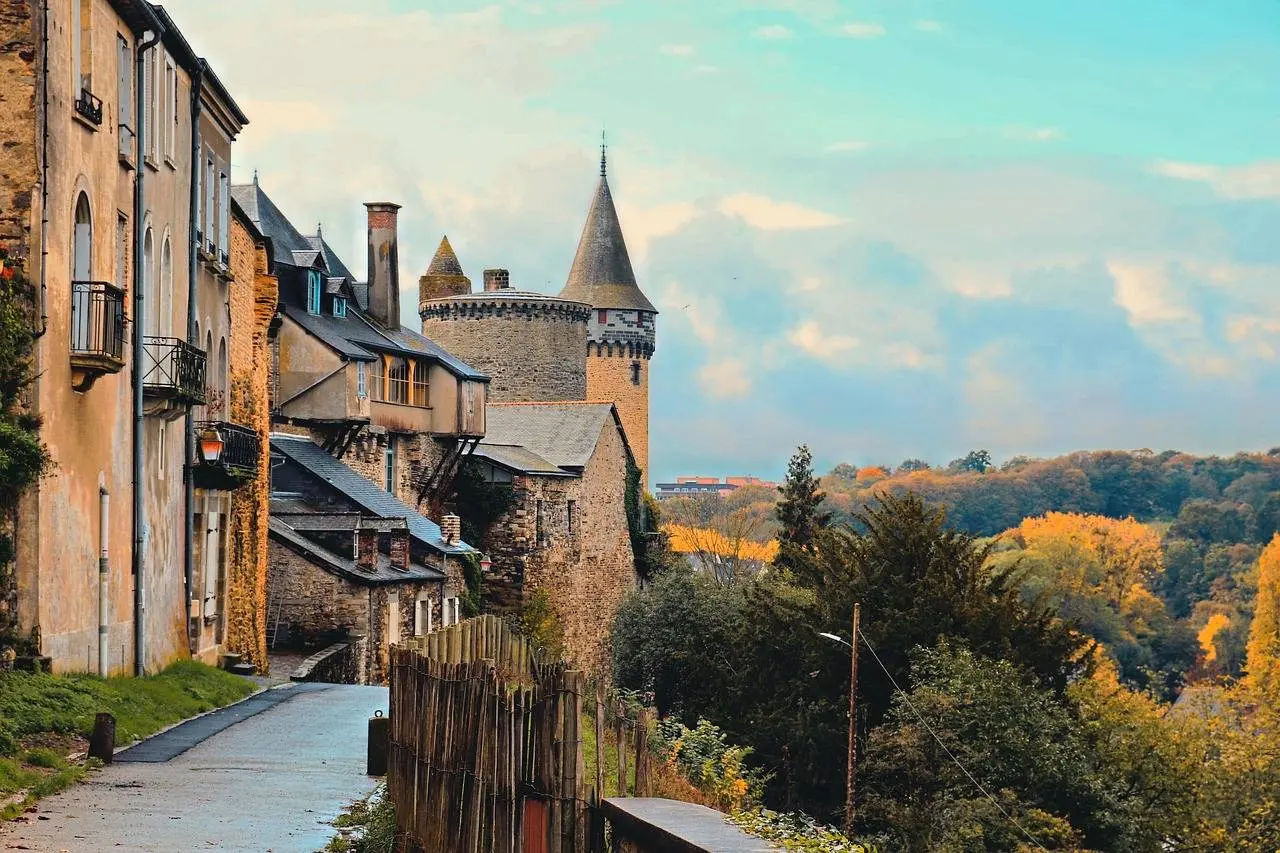
Fougères overlooks the medieval town and is one of the most imposing French strongholds, built on a total space of two hectares, says Belles Demeures. Construction began in the 12th century and produced square and circular towers with ramparts forming three enclosures.
The same source says the château inspired Honoré de Balzac, who stayed several weeks, and Victor Hugo, who described its Mélusine tower at length.
Vitré had a bumpier ride. Wikipedia’s list records it as abandoned in the 17th century, damaged by fire in the 18th century and restored from 1875.
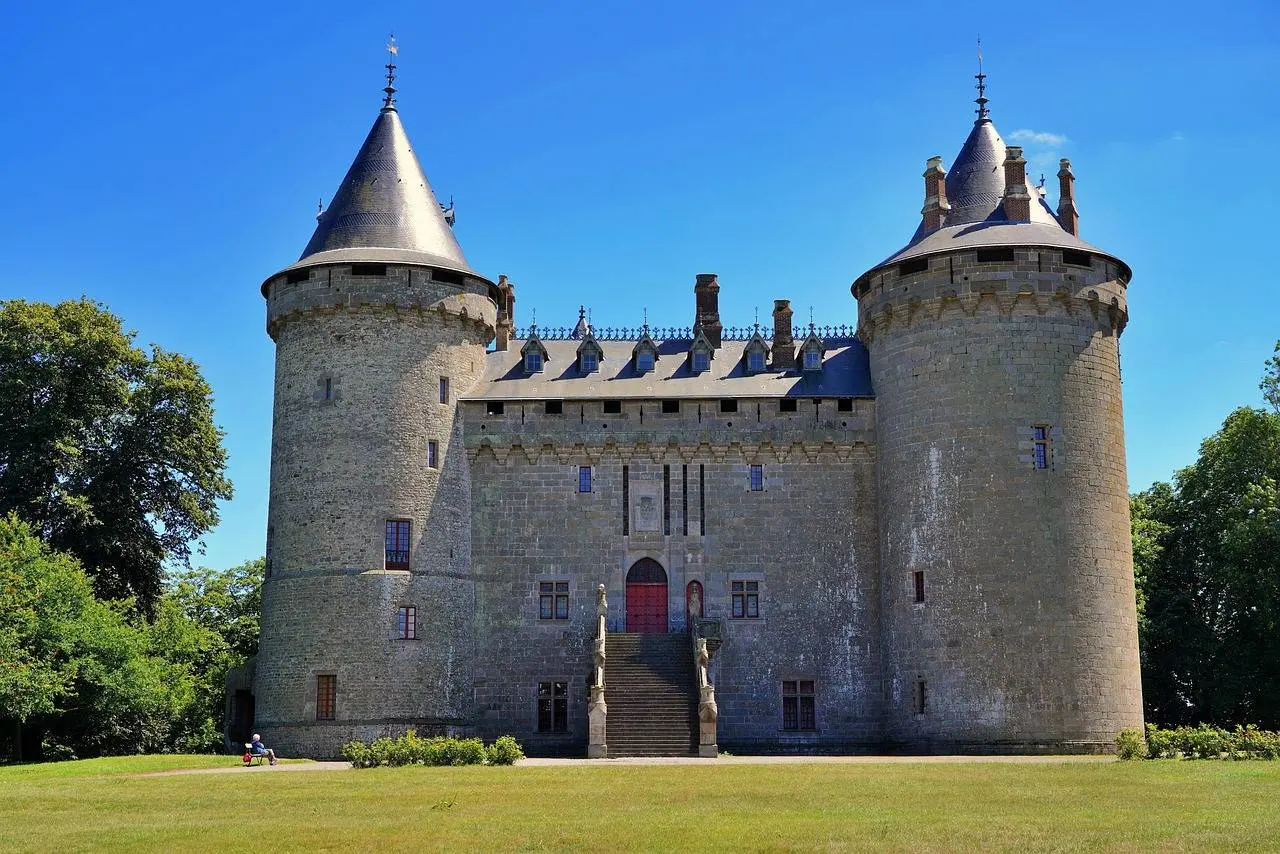
Combourg was built between the 12th and the 15th century on a mound beside Lac Tranquille, according to Belles Demeures. It was entirely renovated in the 19th century in a neo-Gothic style under the influence of Eugène Viollet-le-Duc, and it first rose to defend the Cathedral of Dol and the independence of Brittany.
Its owners included the family of François-René de Chateaubriand, who spent his childhood there, per the same feature.
In Saint-Malo, the Solidor Tower was formerly used as a gaol and is now a museum, Wikipedia’s list notes.
Finistère and Côtes-d’Armor: Renaissance and military sites
Kerjean in Finistère was built in the 16th century during the prosperous years of Brittany and stands in a 19 hectare park, Belles Demeures explains. Wikipedia’s list adds that it was damaged during the French Revolution and restored in the 20th and 21st century.
Two other Finistère sites show the military side of the coast. The Château du Taureau was built in 1542 and redesigned by Vauban in 1689, while Brest was a military fortress until the 20th century on the site of a Roman fort, per Wikipedia.
Kérouzéré was besieged in 1590 during the French Wars of Religion and rebuilt c.1600, the same list says.
In Côtes-d’Armor, the list singles out two substantially intact sites:
- Dinan houses a local museum.
- Fort-la-Latte has a surviving drawbridge.
Both entries come from Wikipedia’s list of castles in Brittany.
How do you plan a route between them?
A short route works best when you group sites by département. Follow these steps:
- Pick one département and two or three castles in it.
- Check each condition on the list: intact, restored or ruined.
- Look at ownership, since the list shows Suscinio under the département and Dinan and Vitré under their communes.
- Confirm access with the owner or site before you set out, because the sources give no opening times.
Ownership details come from Wikipedia’s list, and private owners may set their own visiting rules.
Travellers comparing regions can read about champagne region chateaux for a very different part of the country. Anyone short on time may prefer to look at chateaux near paris instead.
Frequently asked questions
Which Brittany castle pairs best with an old town?
Show answer
Fougères and Vitré, both in Ille-et-Vilaine. Belles Demeures places Fougères above its medieval town, and Wikipedia’s list puts Vitré among the restored castles of the same département.
Are there ruined castles to see?
Show answer
Yes. Largoët in Morbihan and Tonquédec in Côtes-d’Armor are both marked as ruins, and Trémazan in Finistère partially collapsed in 1995, per Wikipedia. Confirm that a site is open before you travel.
Which castle has a famous literary link?
Show answer
Combourg. Belles Demeures says Chateaubriand immortalized it in his Mémoires d’outre-tombe.
Can you go inside Combourg?
Show answer
In the October 2026 edit of Wikipedia’s list, Combourg appears as private but open to the public. Ask the owner about current arrangements before you go.