Planning a trip and unsure which burgundy chateaux deserve your time? Start with Clos de Vougeot for wine, Ancy-le-Franc for Renaissance splendour and Guédelon for a castle still being built.
Read this page alongside the overview of french chateau regions to see how Burgundy compares with the rest of France.
| Item | Value |
|---|---|
| Clos de Vougeot winery built by the monks of Cîteaux | 12th century |
| Ancy-le-Franc, Italian-style palace of its patron | 16th century |
| Guédelon medieval worksite | Around fifty construction workers |
| Appellations in Burgundy | 100 appellations |
| Wine-growing part of the Côte d’Or | 40 kilometres long |
| Distance London to Dijon | 460 miles |
The figures come from Burgundy Tourism and Wikipedia’s Burgundy wine article. They can change, so check the sources before you rely on them.
What makes Burgundy châteaux so varied
Burgundy Tourism says the region is brimming with châteaus, from the ancient fortress of Brancion to Renaissance monuments such as Ancy-le-Franc. Its own selection of 10 remarkable châteaus was chosen for history, architecture, or both, as set out on the Burgundy Tourism list.
That mix makes it easier to plan by theme than by map. Three groups cover most of what you will want to see:
- Wine estates such as Clos de Vougeot and Meursault.
- Renaissance and classical palaces such as Ancy-le-Franc, Saint-Fargeau and Cormatin.
- Ducal and medieval sites such as Germolles, Brancion and Guédelon.
The sections below follow those groups in turn.
Wine châteaux on the Route des Grands Crus
Burgundy Tourism calls the Château du Clos Vougeot the symbol of the Burgundy vineyard. The monks of Cîteaux built the winery and wine press among the vines in the 12th century, and the Confrérie des Chevaliers du Tastevin housed there helped build the reputation of Burgundy wines, according to the tourism board’s château list.
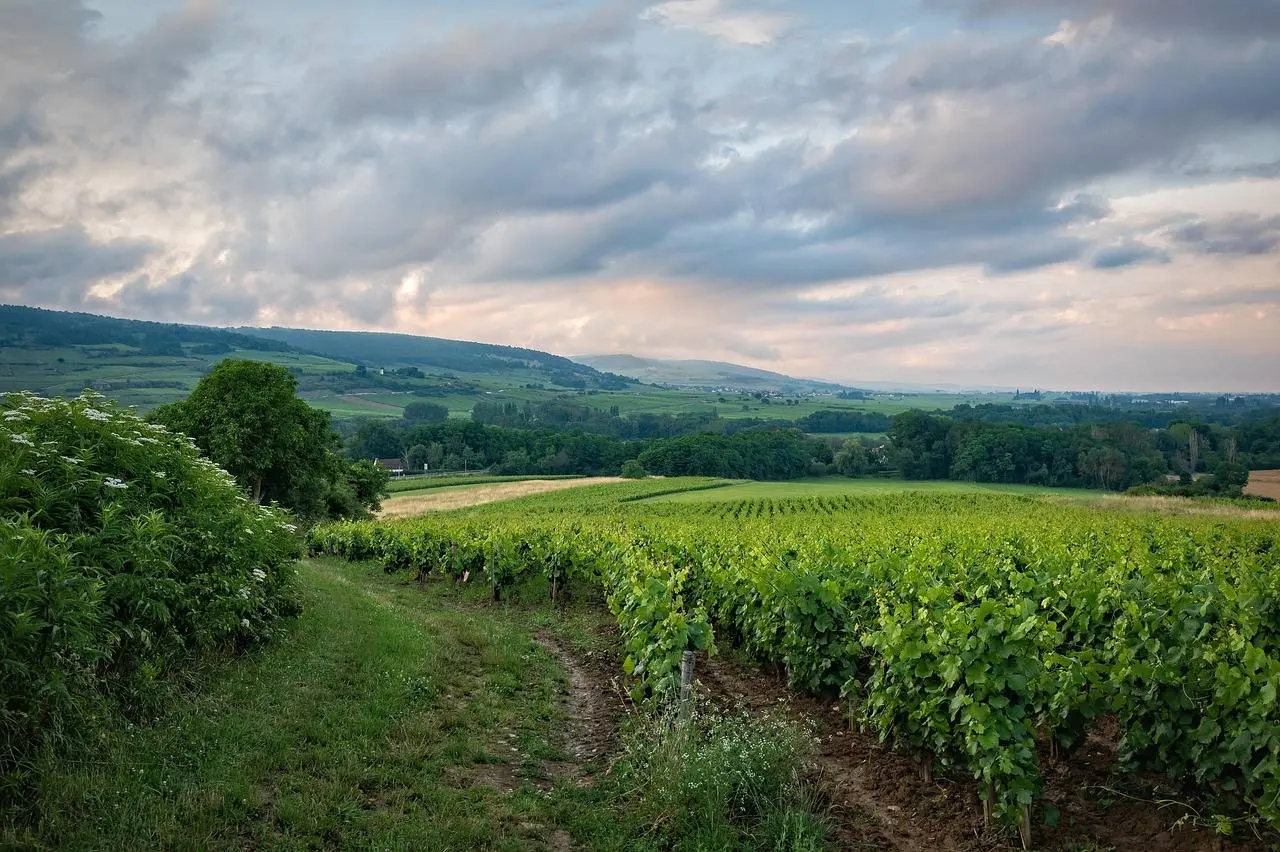
The land around it is small. Wikipedia’s Burgundy wine article puts the wine-growing part of the Côte d’Or at just 40 kilometres long and in most places less than 2 kilometres wide.
A France.fr feature on châteaux in Burgundy describes the Château de Meursault as built in Cistercian style, with vaulted cellars extending beneath the building. The same page points to Château de Chassagne-Montrachet and Château de Pommard as other wine-focused addresses.
Wine is the reason this landscape is so closely tied to its châteaux. The Wikipedia article says Burgundy has a higher number of appellations than any other French region, with 100 appellations sorted into four quality categories: Bourgogne, village, premier cru and grand cru. It adds that delineating vineyards by terroir goes back to medieval times, when monasteries played a key role, which is why the wine and monastic history are so hard to separate.
Renaissance and classical palaces
Several of the best-known interiors in Burgundy are Italian-inspired, classical or Baroque in style. Each entry below follows the descriptions on the Burgundy Tourism list unless noted.
- Ancy-le-Franc: in the 16th century its patron, Antoine de Clermont de Tonnerre, called on Italian artists including the architect Sebastiano Serlio, and the result is a palace in Italian style from floor to ceiling.
- Saint-Fargeau: a pentagon of pink brick designed by Louis Le Vau, with historical reenactments throughout the summer.
- Cormatin: France.fr says its apartments have survived since 1628 and form the best-preserved ensemble from the Louis XIII period, as the France.fr feature explains.
- Bussy-Rabutin: home of Comte Roger de Bussy-Rabutin, banished from court after revealing the indiscretions of Louis XIV’s court in his writings.
- Bazoches: the château of Vauban, who acquired it in 1675 and renovated it to his own tastes and to military and family needs.
If you are weighing regions against each other, the loire valley chateaux have their own guide, and another landscape altogether is covered in the page on dordogne castles.
Ducal, medieval and fortified sites
The older end of the list is where Burgundy’s dukes and religious wars show most clearly. The Burgundy Tourism descriptions give these highlights:
- Germolles: an ancient fortified house refurbished by Philip the Bold, singled out as particularly well conserved and a fine example of royal splendour.
- Tanlay: in the 16th century, during the Religious Wars, it became a Protestant stronghold, and Admiral de Coligny lived here before he was assassinated in the St. Bartholomew’s Day massacre.
- Brancion: a place to walk in the footsteps of the lords and dukes of Burgundy, with a view over the Mâconnais vineyards.
- Guédelon: around fifty construction workers are building a fortified castle with the techniques of the Middle Ages.
- Ray-sur-Saône: significant renovation work began in 2018 to safeguard the monument, and it suits cyclists on the Voie Bleue V50 route.
Guédelon is the odd one out because it is a worksite, not a finished château. That is the point of going.
How do you plan a Burgundy châteaux route?
Burgundy Tourism describes the region as simple to reach, with high-speed trains, major motorways and nearby airports, and gives the distance from London to Dijon as 460 miles. Its travel notes also list Eurostar to Paris with a TGV onward as one rail option.
A simple order of work keeps a trip manageable:
- Pick one theme first: wine estates, Renaissance interiors or medieval fortresses.
- Check each château’s own website for opening days, since events such as summer reenactments are seasonal.
- Choose a base that suits that theme, then add a second or third stop nearby.
- Keep cycling in mind where a château sits on a bike route.
This site does not take bookings or sell tickets, so use each château’s official channels for visits.
Frequently asked questions
Which Burgundy château is most tied to wine?
Show answer
Clos de Vougeot. Burgundy Tourism describes it as quite simply the symbol of the vineyard, and it sits on the Route des Grands Crus. You can read that on the tourism board’s page.
Can you visit a castle that is still being built?
Show answer
Yes, at Guédelon. Burgundy Tourism calls it a castle you visit while it rises from scratch, so expect a working site rather than furnished rooms, according to its top châteaux page.
Is there a château linked to a poet?
Show answer
Château de Saint-Point was the home of Alphonse de Lamartine, who lived there with his English wife, Mary-Ann Birch. The Burgundy Tourism list mentions a Gothic restoration and English-style gardens.
Are all the listed châteaux complete buildings?
Show answer
No. At Brancion only ruins remain today, according to the Burgundy Tourism list, and Guédelon is new construction in the medieval manner. Most of the others are standing houses and palaces.