Planning a trip around Normandy chateaux and castles and unsure where to start? Begin with the ducal fortresses at Caen and Falaise, then add Château Gaillard and a civil château such as Balleroy.
This guide is part of our wider look at french chateau regions, and Normandy rewards both fortress fans and lovers of elegant country houses.
| Item | Value |
|---|---|
| Caen Castle, built by William the Conqueror | Around 1060 |
| Falaise castle, construction started on the earlier site | 1123 |
| Château Gaillard, construction began | 1196 |
| Château Gaillard, final French capture | 1449 |
| Rouen keep (Joan of Arc’s Tower), built after | 1204 |
Dates come from History Hit and Normandy Tourism. Historians and sites sometimes give slightly different dates, so check the source before you rely on them.
Ducal fortresses: Caen, Falaise and Rouen
Caen Castle was built around 1060 by William the Conqueror, and his son Henry I later added the Saint George’s church, a keep and a large hall for the ducal court. Today the site houses the Museum of Fine Arts of Caen, the Museum of Normandy and the Exchequer of Normandy, according to History Hit.
Normandy Tourism adds that William and his wife Matilda also commissioned two abbeys in the city. For a meal afterwards, it suggests the medieval Vaugueux district, where cobbled streets are lined with restaurants and cafés (Normandy Tourism).
Falaise stands where William was born, at an earlier castle on the same site. The present castle was started in 1123 under Henry I of England, and about 1207 Philip II of France ordered a new cylindrical keep. It has been protected as a monument historique since 1840, per History Hit.
In Rouen, the Donjon, also called Joan of Arc’s Tower, served as the keep of Rouen Castle, built by Philip Augustus after 1204. Joan was not imprisoned in this tower, but she was executed in 1431 on the Place du Vieux-Marché, and the Historial Jeanne d’Arc museum now tells her story (Normandy Tourism).
Château Gaillard and the frontier ruins
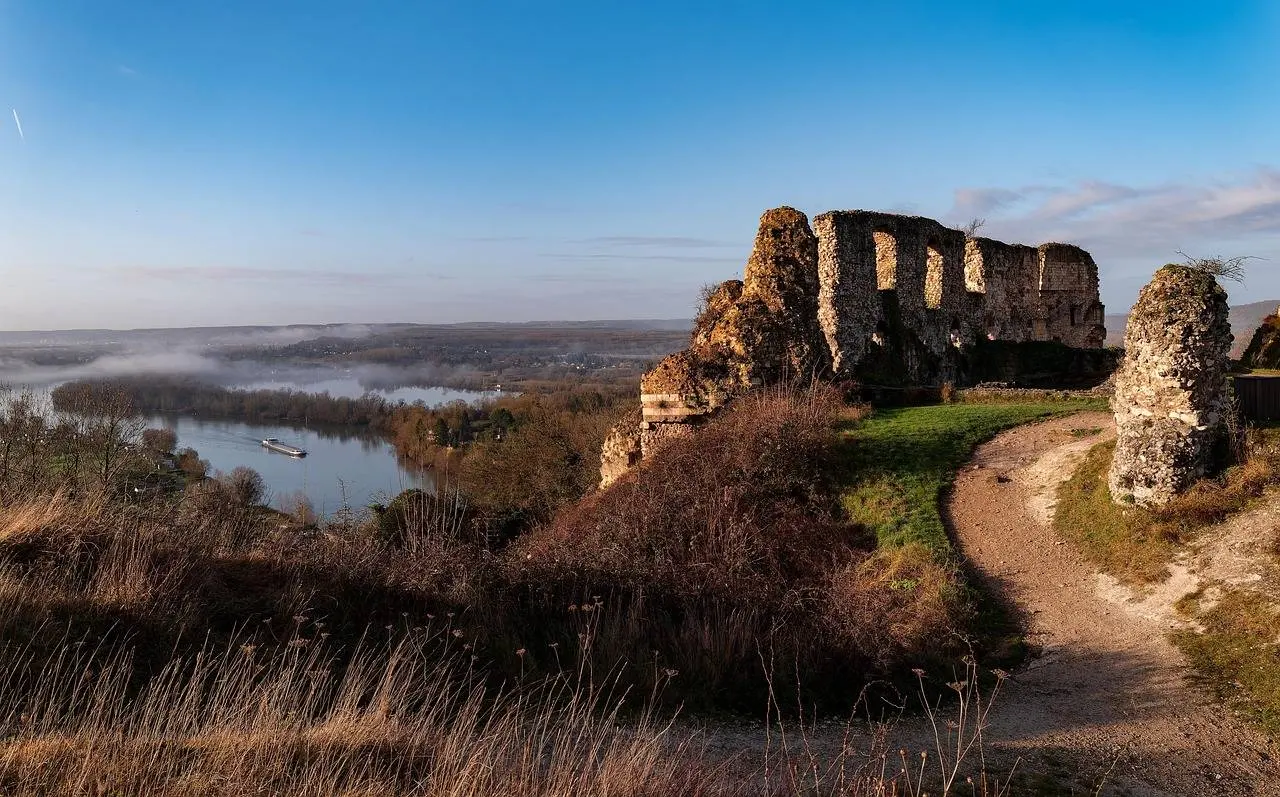
Château Gaillard, above Les Andelys, was begun in 1196 under Richard the Lionheart. It uses early principles of concentric fortification and was among the earliest European castles to use machicolations. In 1449 the French took it from the English king for good (History Hit).
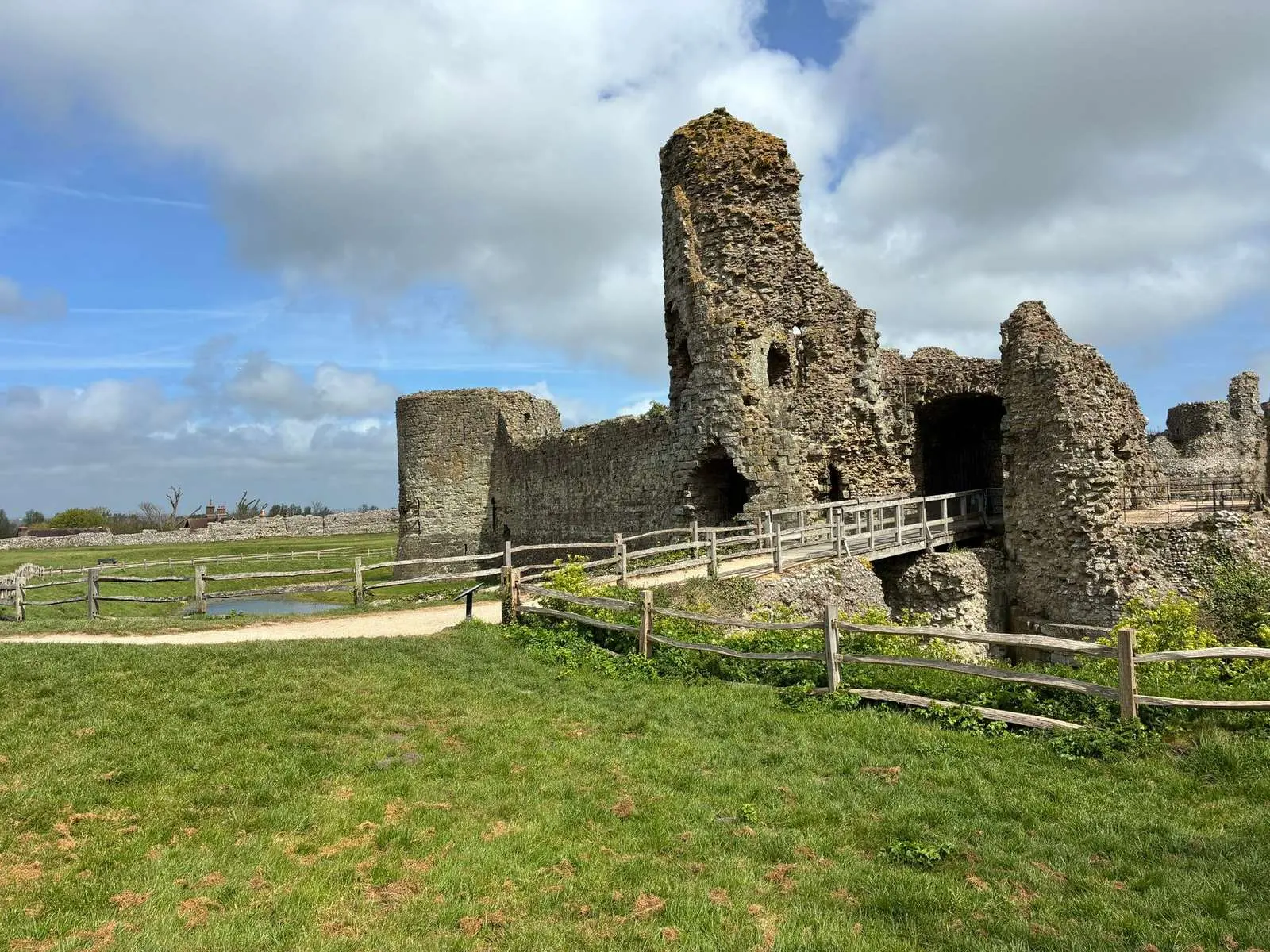
History Hit’s guide says the inner bailey is open to the public from March to November, while the outer baileys are open all year. Opening arrangements change, so confirm them with the site before you travel (History Hit).
Other ruins show how the borderlands between the duchy and the French crown were fortified, and how many of those fortresses ended:
- Châteauneuf-sur-Epte: construction started around 1097 under William Rufus to reinforce the frontier along the Epte river. It was ordered dismantled in 1647, and the ruins are private property (History Hit).
- Conches-en-Ouche: construction dates back to 1034, and Philip II of France captured it in 1199. It was demolished soon after the Catholic League took refuge there in 1591 (History Hit).
- Courcy: a ruin typical of medieval military architecture, demolished by order of Richelieu at the start of the 17th century (History Hit).
Which Normandy castles double as museums?
Normandy Tourism notes that other castles and châteaux house museums, naming Caen, Crèvecoeur-en-Auge, Bricquebec, Flers, Dieppe and Eu among them (Normandie Tourisme). Two castles near Bayeux add a wartime angle:
- Colombières: a medieval castle built during the 14th century in Calvados, according to History Hit. Bayeux Bessin Tourisme mentions a guided tour and a 1944 museum dedicated to the Ritchie Boys (Bayeux Bessin Tourisme).
- Creully: its radio museum recalls that the BBC set up its studio in the castle’s square tower during the landings in June 1944 (Bayeux Bessin Tourisme).
Civil châteaux, manors and literary houses
Not every Norman château was built for war. Normandy Tourism lists civil architecture at Balleroy, Saint-Germain-de-Livet, Bizy, Champ-de-Bataille, Carrouges, the Haras du Pin stud farm and the Manoir d’Ango in Varengeville-sur-Mer (Normandie Tourisme).
Several of these houses carry a literary or historical memory. The same tourism page points to Henri IV and Chateaubriand at Fervaques, Michelet at Vascoeuil, and Guy de Maupassant at Miromesnil, near Dieppe (Normandie Tourisme).
Around Bayeux, Balleroy offers a guided tour of historic rooms, a museum and park, a gift shop and a tearoom. Fontaine-Henry is described as one of the most spectacular monuments in Normandy, a former fortress beautifully decorated during the Renaissance (Bayeux Bessin Tourisme).
Planning a route with Bayeux and Mont-Saint-Michel
Bayeux sits just minutes from the D-Day Landing Beaches and escaped the destruction of 1944. Its cathedral was consecrated in 1077 in the presence of William the Conqueror and Queen Matilda (Normandy Tourism).
The same page dates the history of Mont-Saint-Michel to the year 708 and recommends visiting in the off-season or staying overnight to enjoy it after the crowds have gone (Normandy Tourism). It also says Caen stone was used to build Westminster Abbey and the Tower of London.
A simple way to structure a trip:
- Pick a theme: ducal fortresses, ruins, wartime sites or civil châteaux.
- Group the sites by area, for example Caen, Falaise and Bayeux together.
- Check each site’s own page for opening days and access before you set off.
If you are comparing regions, the guide to dordogne castles gives a different starting point. Our notes on alsace castles do the same for another corner of France.
Frequently asked questions
Which Normandy castles are tied to William the Conqueror?
Show answer
Falaise marks the place of his birth, and Caen’s fortress was his own project. Bayeux’s cathedral is linked to him too, as Normandy Tourism records in its medieval towns guide.
Is Château Gaillard a ruin?
Show answer
Yes. History Hit describes it as a ruined medieval castle standing above the commune of Les Andelys (History Hit).
Which castles can I see on the Bayeux side?
Show answer
Bayeux Bessin Tourisme lists monuments including Balleroy, Creully, Colombières and Fontaine-Henry, so a day trip can link several of them (Bayeux Bessin Tourisme).
Is Mont-Saint-Michel a castle?
Show answer
It is better described as an abbey island, though Normandy Tourism calls it a rocky island fortress and notes that it withstood English sieges in the Hundred Years’ War (Normandy Tourism).