Wondering what makes french formal gardens look so ordered? They are symmetrical designs that impose order on nature, built around long perspectives, geometric parterres and water, and Vaux-le-Vicomte is where the style was born.
This guide sits within the site’s wider look at french castle history, where gardens are read alongside the buildings they frame.
| Item | Value |
|---|---|
| Vaux-le-Vicomte garden area | 33 hectares |
| Vaux-le-Vicomte main perspective | over three kilometers |
| Vaux-le-Vicomte park | 500 hectares |
| Gardens of Versailles area | 800 ha |
| Versailles UNESCO World Heritage inscription | 1979 |
The figures come from the Vaux-le-Vicomte garden page and the Gardens of Versailles article. They can change, so check the sources before you rely on them.
What defines a French formal garden?
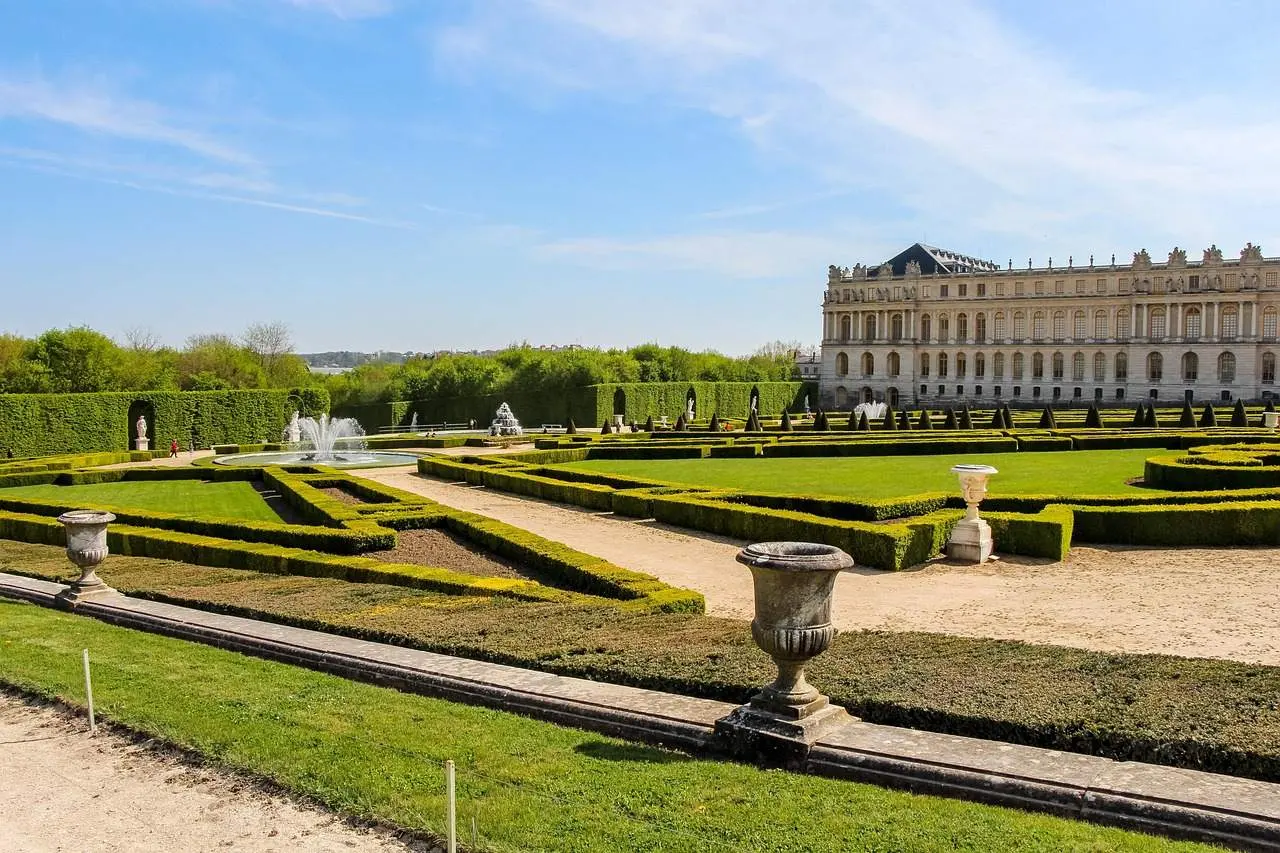
The jardin à la française is, in Wikipedia’s definition, a style of garden based on symmetry and the principle of imposing order on nature. Its epitome is generally considered to be Versailles, designed during the 17th century by André Le Nôtre for Louis XIV and widely copied by other European courts.
Five ideas recur in the best examples:
- Symmetry and order: French gardens were symmetrical and well manicured to represent order, an idea that Wikipedia says extended to French society at the time.
- The chateau as focal point: the house is meant to be the visual centre of the design, not a building set beside a garden.
- Perspective: Le Nôtre is known for geometric perspectives, broad axes and secondary vistas, as the Château de Versailles describes his work.
- Water: Le Nôtre gave pride of place to water in all its forms, according to the Vaux-le-Vicomte estate.
- Surprise: trompe-l’œil effects and unexpected revelations are scattered through the design, so a rigid plan still feels varied on foot.
Italian roots: from Renaissance gardens to a new style
The style evolved from the French Renaissance garden, which was itself inspired by the Italian Renaissance garden at the beginning of the 16th century, Wikipedia explains. The Italian model was typified by the Boboli Gardens in Florence and the Villa Medici in Fiesole. Its main ingredients were:
- planting beds, or parterres, in geometric shapes and symmetrical patterns;
- fountains and cascades to animate the garden;
- stairways and ramps joining different levels;
- grottos, labyrinths and statuary on mythological themes.
French kings carried these ideas home step by step, as the same Wikipedia article records:
- In 1495, after his Italian campaign, Charles VIII brought Italian craftsmen and garden designers from Naples and ordered Italian-style gardens at Amboise.
- From 1528, Francis I created new gardens at Fontainebleau with fountains, parterres and the first artificial grotto in France.
- In 1536, the architect Philibert de l’Orme created the gardens of the Château d’Anet following Italian rules of proportion.
Anet, with its parterres and water integrated with sections of greenery, became one of the earliest and most influential examples of the classic French garden. Even so, Renaissance gardens were usually enclosed by walls and not integrated with the architecture of the châteaux. The buildings of that era are covered in the guide to french renaissance chateaux.
Vaux-le-Vicomte, where the style took shape
In 1656, when Nicolas Fouquet became Louis XIV’s Superintendent of Finances, he commissioned Louis Le Vau, Charles Le Brun and André Le Nôtre to renovate his estate and garden, according to Wikipedia’s Vaux-le-Vicomte article. It was the first time the three worked together on a project of this scale.
The result was the first important garden à la française, and Wikipedia notes it was the first time the garden and the chateau were perfectly integrated. The estate itself calls Vaux-le-Vicomte the birthplace of the formal French garden.
The scale was deliberate. The garden covers 33 hectares and is centered on a perspective stretching over three kilometers, while the surrounding park spans 500 hectares, enclosed by a 13-kilometer wall, per the estate’s garden page. To secure the grounds, Fouquet purchased and demolished three villages, Wikipedia reports.
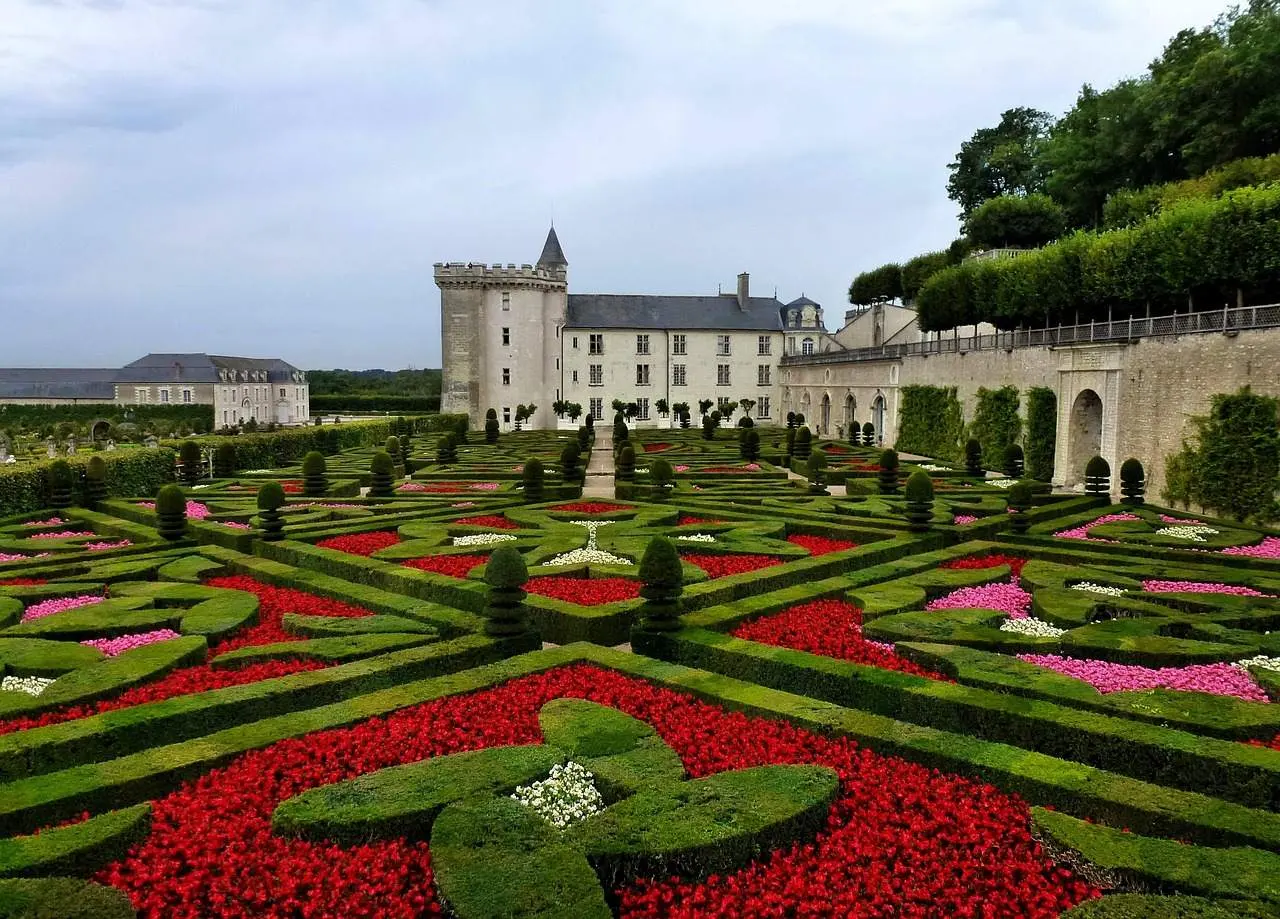
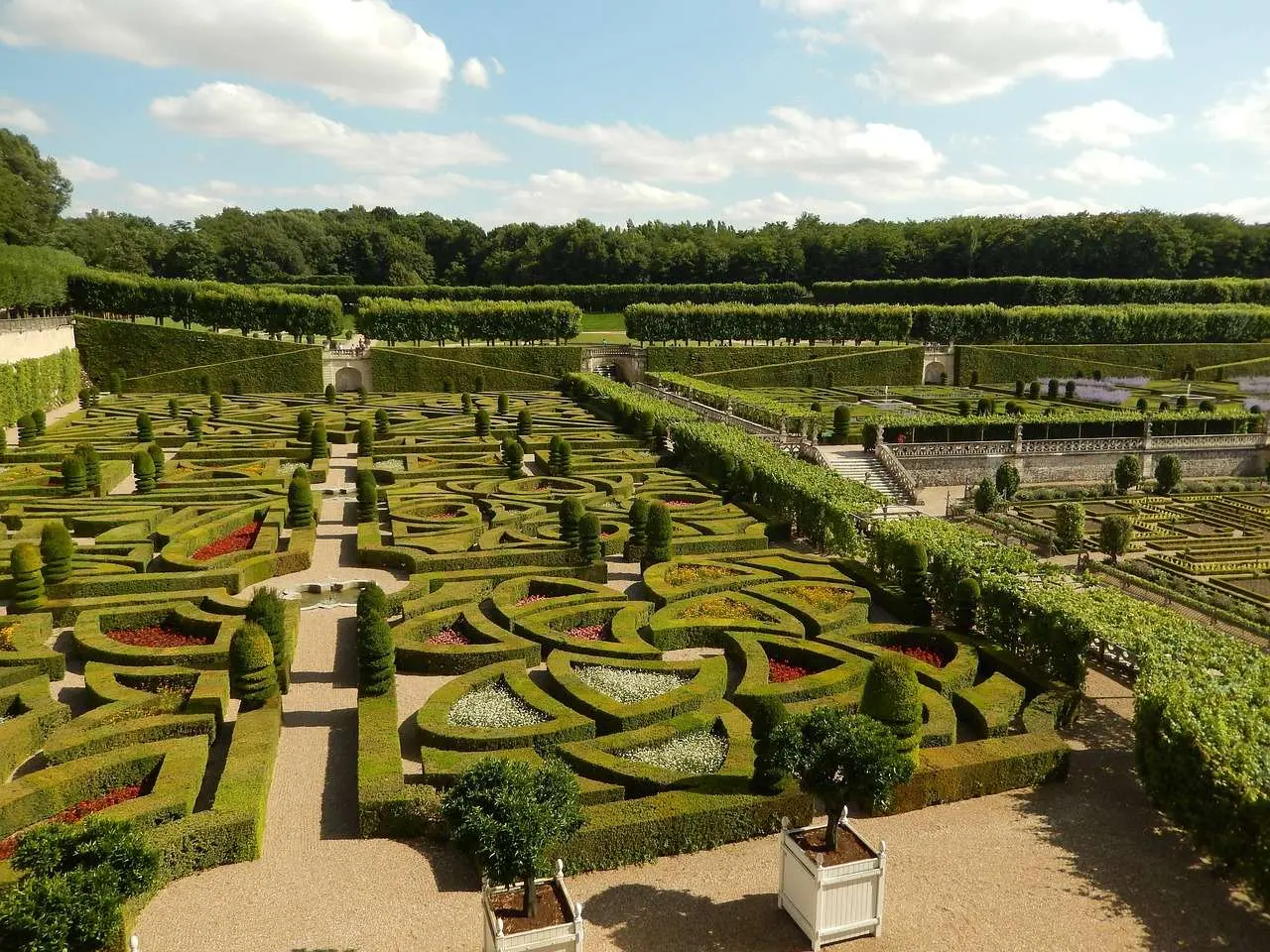
One feature still puzzles historians: the great flower parterre beneath the windows of Fouquet’s ceremonial apartment. Flowers were rarely used in formal French gardens because of their fleeting nature, says the estate, and the head gardener designs a new version each year for bloom from May through October.
Maintenance is part of the story too. In 2019 the estate replaced the boxwood in the bowling green parterres with a temporary artwork, The Ephemeral Ribbons, made of 390 tilted aluminum plates inspired by embroidery-style arabesque patterns, as the garden page describes.
Parterres, water, topiary and surprises
At Vaux the space was filled with parterres of evergreen shrubs in ornamental patterns, bordered by coloured sand. The alleys were decorated at regular intervals by statues, basins, fountains and carefully sculpted topiaries, according to Wikipedia.
Each element has a role:
- Parterres de broderie: embroidery-like patterning meant to be seen from the windows above.
- Water: at Vaux the hydraulic system still works by gravity alone, as it did in the 17th century, says the estate.
- Statues: Fouquet commissioned leading sculptors, and the garden now holds sixty-three sculptures, per the same page.
- Groves: at Versailles, Le Nôtre’s groves are sheltered from prying eyes by dense masses of greenery, so curiosity turns into wonderment on entering, notes the Château de Versailles.
Topiary deserves its own mention. The art of topiary was first practised by the Romans and came back into vogue during the Renaissance. Le Nôtre then expanded and varied the repertoire of shapes, turning it into an art form in its own right, according to the Château de Versailles.
Versailles and the work of Le Nôtre
In 1661, after the disgrace of Fouquet, Louis XIV turned his attention to Versailles, with the aid of Le Vau, Le Brun and Le Nôtre, according to the Gardens of Versailles article. The gardens that followed were created between 1662 and 1700 and were the greatest achievement of the garden à la française, says Wikipedia.
Le Nôtre remodelled the space around a double east-west and north-south axis and redesigned terraces, parterres and groves. Today the gardens cover some 800 ha, and the Grand Canal is their masterpiece. The château and gardens were inscribed on the UNESCO World Heritage List in 1979, as the same article notes.
Wikipedia’s account also stresses the contrast between grand perspectives reaching to the horizon and small gardens of statuary that gave a more human scale and intimate spaces.
Le Nôtre, born in Paris in 1613 into a family of royal gardeners, worked well beyond Versailles. The Château de Versailles says he redesigned the Tuileries Gardens between 1665 and 1679, and his projects included Chantilly and Sceaux. He also worked at Greenwich and Windsor in England. A fuller profile of the designer is in the guide to andre le notre.
What to look for when you walk a formal garden
You can test the principles on the ground. A simple route:
- Stand at the chateau and look along the main axis to see how the perspective is framed.
- Look down on the parterres to read their patterns, then compare them with the plantings at ground level.
- Follow the water, from still pools to fountains, and note how the layout is organised around it.
- Step into a grove or side path to find the surprises that break up the grand plan.
Timing changes what you see. At Versailles, the administration sponsors the Grandes Eaux on weekends from late spring to early autumn, when all the fountains are in full play, per the Gardens of Versailles article. At Vaux, the estate notes two walking trails offering different perspectives on the design, and the flower parterre is at its fullest from May through October, according to its garden page. Check each operator’s own schedule before you travel.
Frequently asked questions
Who designed the first true French formal garden?
Show answer
André Le Nôtre laid out the gardens at Vaux-le-Vicomte for Nicolas Fouquet, working with the architect Louis Le Vau and the painter Charles Le Brun, as Wikipedia describes it.
Why are flowers unusual in these gardens?
Show answer
Their short life made them a poor fit for a design built on lasting geometry and evergreen shrubs. That is why the large flower parterre at Vaux-le-Vicomte still puzzles historians, according to the estate.
What is topiary?
Show answer
It is the shaping and pruning of shrubs into a form of plant sculpture, a practice that the Château de Versailles traces back to the Romans.
Did the style spread outside France?
Show answer
Yes. Wikipedia says Versailles was widely copied by other European courts, and Le Nôtre himself worked at Greenwich and Windsor in England and at Racconigi and Venaria Reale in Italy, per the Château de Versailles.