Planning a visit to Versailles and wondering who designed those vast gardens? Andre Le Notre, Louis XIV’s head gardener, laid out the great axes, parterres and groves that still define them. Here is his story, and what to look for.
This profile is one chapter in the wider story of french castle history.
| Item | Detail |
|---|---|
| Born | 12 March 1613, in Paris |
| Head gardener at the Tuileries | 26 June 1637 |
| Vaux-le-Vicomte work for Fouquet | 1656-1661 |
| Began work for Louis XIV at Versailles | 1661 |
| Ennobled by the king | 1675 |
| Died | 15 September 1700 |
These dates come from Wikipedia’s biography and the Palace of Versailles profile. Dates can be revised as scholarship changes, so check the sources before you rely on them.
A gardener’s son at the Tuileries
Le Nôtre was born in Paris, at the Tuileries, into a family of royal gardeners and garden designers, according to the Palace of Versailles. His birth date was 12 March 1613, and Wikipedia adds that the family lived in a house within the gardens, so he grew up surrounded by the trade.
His schooling went well beyond horticulture. He learned mathematics, painting and architecture, and he studied under the painter Simon Vouet in 1629-1635, as the Versailles timeline records. Wikipedia notes that he befriended Charles Le Brun in that studio.
Court posts followed quickly. In 1635 he was named principal gardener to the king’s brother Gaston, Duke of Orléans, and on 26 June 1637 he took over his father’s position as head gardener at the Tuileries, per Wikipedia.
Vaux-le-Vicomte: the project that made his name
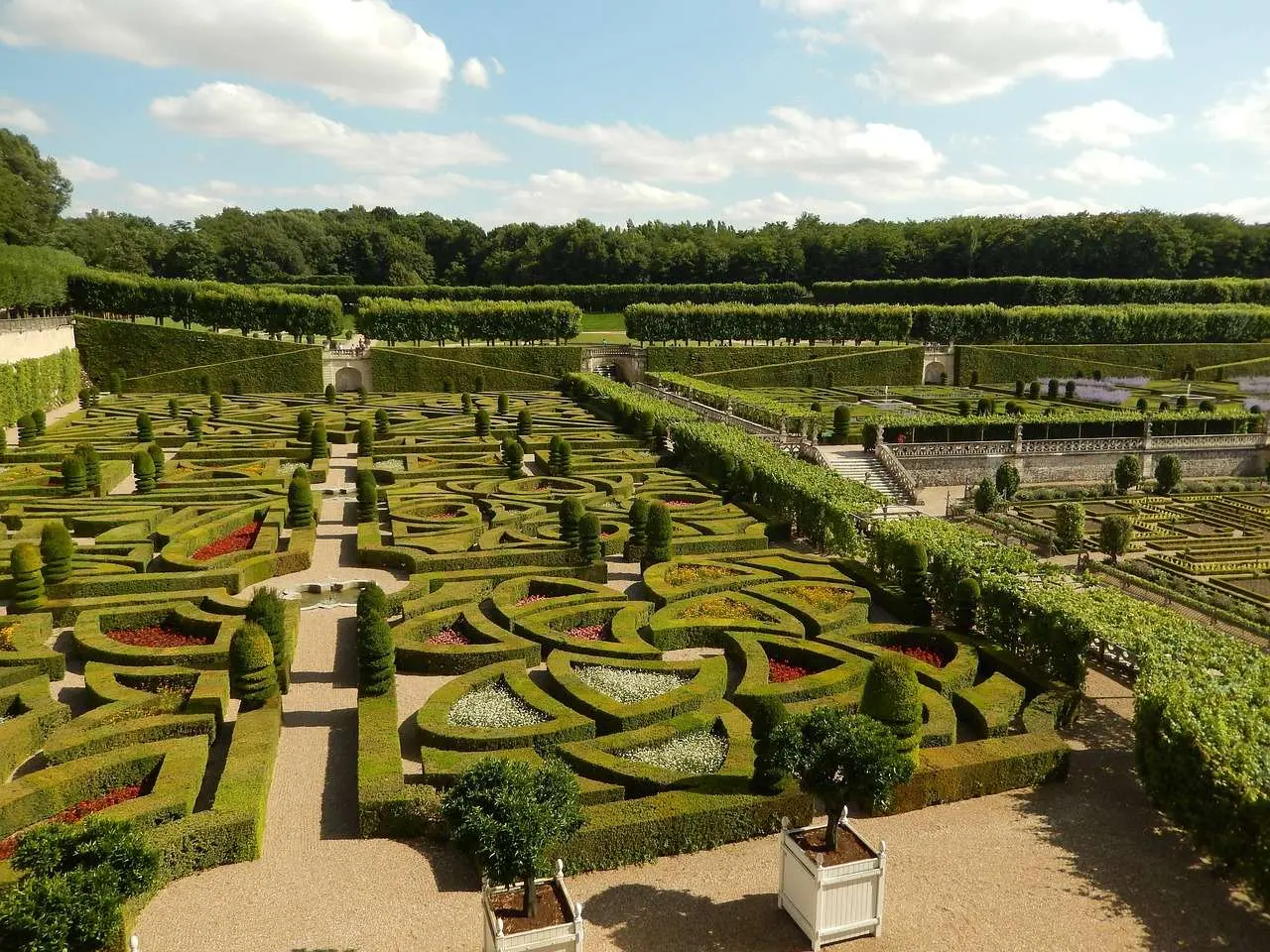
His first major garden design was for Nicolas Fouquet, Louis XIV’s Superintendent of Finances. Fouquet began work on the château in 1657 and brought together the architect Louis Le Vau, the painter Charles Le Brun and Le Nôtre, according to Wikipedia. Le Nôtre laid out a grand, symmetrical arrangement of parterres, pools and gravel walks.
The designers made clever use of the site’s changing levels. The canal is invisible from the house, and forced perspective makes the grotto appear closer than it really is, Wikipedia explains.
The Palace of Versailles dates his work for Fouquet to 1656-1661 and says it earned him fame and fortune, so the sources differ slightly on the start (Versailles profile). The gardens were complete by 1661, when Fouquet held a grand entertainment for the king. Fouquet was then arrested for embezzling state funds, and his artists and craftsmen were taken into the king’s service (Wikipedia).
How did Le Nôtre design Versailles?
From 1661 Le Nôtre worked for Louis XIV on the gardens and parks of Versailles. The king extended the existing hunting lodge until it became his primary residence and seat of power, Wikipedia reports.
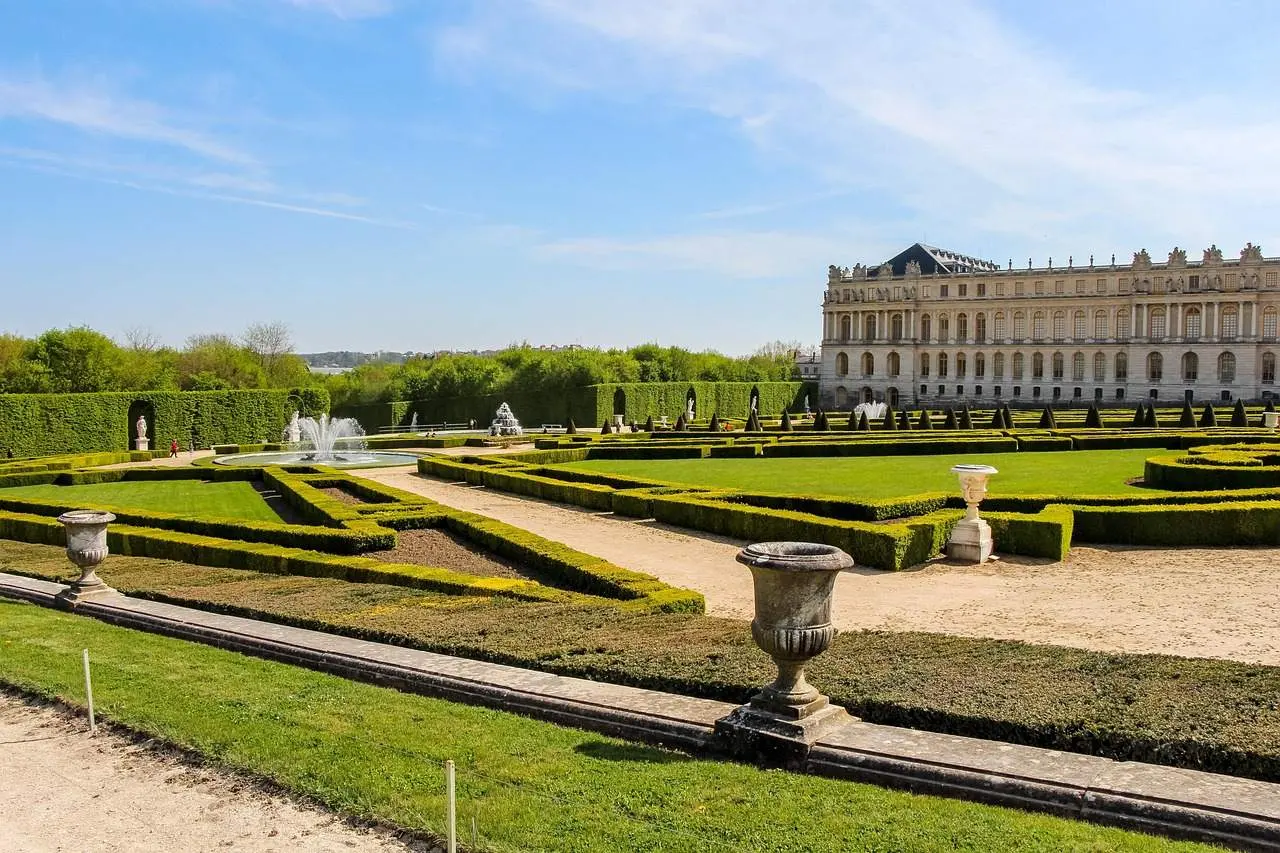
The Palace of Versailles says he started from the initial garden left by Louis XIII. He created two large parterres to the north and south near the palace and redesigned the large east-west axis into a perspective stretching as far as the eye could see (Versailles profile).
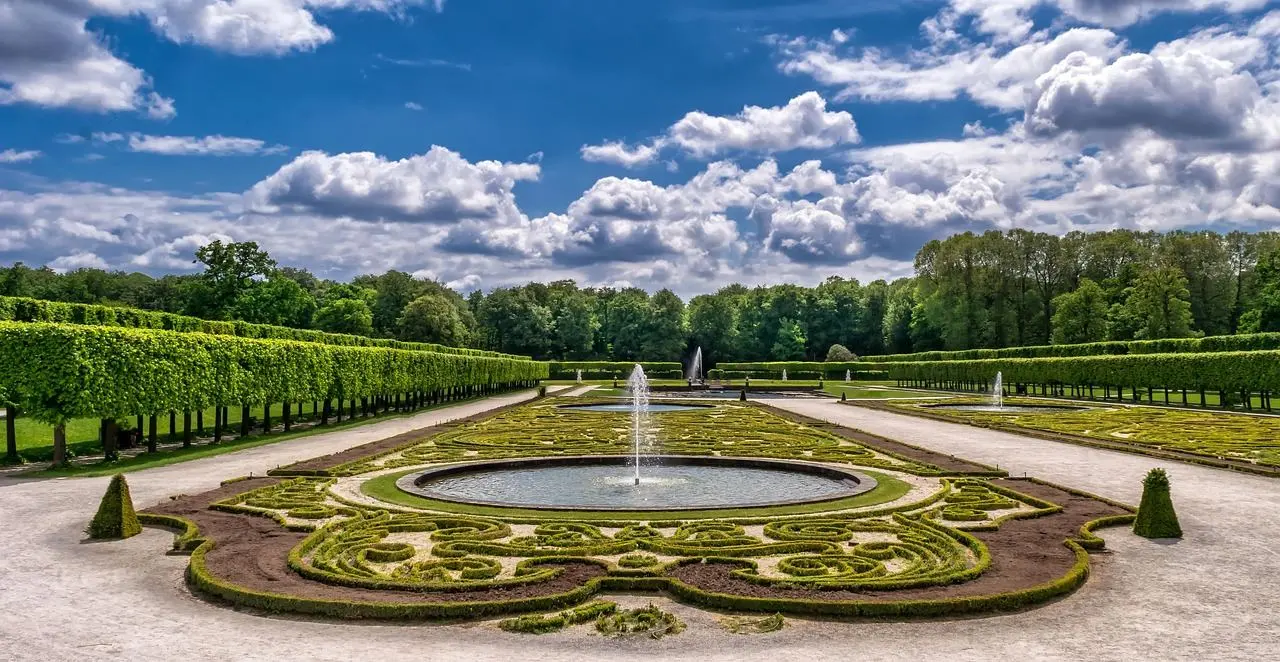
The same Versailles profile describes a handful of repeatable ideas:
- main axes crossed by secondary alleys that mark off the groves;
- shady groves set beside lighter, open parterres;
- trellises and arbours that form walls of greenery and strengthen the perspectives;
- diagonal or winding alleys leading to groves designed to surprise visitors;
- statues and yew trees trimmed into unexpected shapes, which made Versailles famous for topiary.
Water was part of the plan too. The encyclopedia Universalis describes a network of artificial ponds linked by masonry aqueducts and reaching as far as Rambouillet, built to feed the fountains of the royal park. It adds that Le Nôtre took part in all of these works, and sometimes originated the ideas himself.
Beyond Versailles: gardens for other patrons
Le Nôtre’s career ran well beyond one palace. The Palace of Versailles lists these among his other major creations:
- Saint-Cloud, for Monsieur, Louis XIV’s brother (1665) (Versailles profile);
- Sceaux, for Colbert (1670-77) (Versailles profile);
- Clagny, for Madame de Montespan (1674) (Versailles profile);
- the large terrace of Saint-Germain (1669-72) (Versailles profile);
- the gardens of Trianon (1672-88) (Versailles profile).
At the Tuileries, where his career began, he redesigned the gardens between 1665 and 1679. He created a central path aligned with the palace, and the avenue beyond it would later become the Champs-Élysées, the Versailles exhibition site notes.
His commissions crossed borders as well. The same site mentions Greenwich for Charles II of England, Windsor, and Racconigi and Venaria Reale in Italy for Charles-Emmanuel II and then Victor-Amadeus II of Savoy (Le Nôtre in perspectives). Herodote.net reports that, of all his gardens, Chantilly was the one he preferred.
The king’s friend and his later years
Louis XIV ennobled him in 1675. The Palace of Versailles says he enjoyed not only the king’s favour but also his friendship, something it calls extremely rare, until the end (Versailles profile).
Herodote.net tells a well-known story about the ennoblement. When Le Nôtre joked that he already had a coat of arms of three snails crowned with a cabbage, the king took him at his word and granted exactly that (Herodote.net). The same page says Mansart, the architect of Versailles, looked down on him, and Le Nôtre repaid him by always introducing him to the king as “your mason”.
He was also a collector. In 1653 he commissioned Christ and the Adulteress from Nicolas Poussin, which the Versailles exhibition site presents as a sign of the quality of his collection. The Versailles profile adds that he bequeathed part of his collections to the king in 1693.
Le Nôtre died on 15 September 1700, Wikipedia records, having spent a long life in the service of the crown.
What did he leave behind?
His influence reached into town planning. Wikipedia says he laid out the radiating city plan of Versailles, including the Avenue de Paris, the largest avenue yet seen in Europe. It adds that the Versailles design later influenced Pierre Charles L’Enfant’s master plan for Washington, D.C. (Wikipedia).
The Palace of Versailles claims his legacy is still vibrant, since some of the world’s finest architects and town planners remain devotees of his way of visualising space (Le Nôtre in perspectives).
To place his style in context, the guide to french formal gardens is a good next step. The royal estates he shaped later passed through very different times, which the guide to french revolution chateaux covers. Before visiting Versailles, check the Palace’s official pages for current opening times.
Frequently asked questions
What was Le Nôtre’s official role at court?
Show answer
Beyond being the king’s gardener, he held the post of Controller-General of the Royal Buildings, as Wikipedia describes. The Palace of Versailles calls him the king of gardeners, and says he gave the “French garden” its noble reputation (Versailles profile).
Did he design the château at Vaux-le-Vicomte?
Show answer
No. Herodote.net credits the building to the architect Louis Le Vau and the painter Charles Le Brun, while Le Nôtre created the parterres and fountains around it.
Did Le Nôtre write down his methods?
Show answer
Hardly. According to Wikipedia, he seldom wrote about his approach and expressed himself through his gardens. Universalis describes Désallier d’Argenville’s treatise as in some ways a summary of his precepts.
Did he have a family of his own?
Show answer
He married Françoise Langlois in 1640. The couple had three children, but none survived to adulthood (Wikipedia).