Wondering how french renaissance chateaux differ from the medieval castles you may know? They swapped defensive walls for large windows, open galleries and Italian-style ornament.
The wider story is told in this guide to french castle history, which places the Renaissance in context.
| Item | Value |
|---|---|
| Span of the style | Late 15th to early 17th centuries |
| First period (Italian style copied directly) | About 1491 to 1540 |
| Second period (French character) | 1540 to 1589 |
| Skilled Italians Charles VIII took home from Naples | Twenty-two craftsmen |
| Building of Azay-le-Rideau | 1518 to 1524 |
These figures come from Wikipedia’s entry on French Renaissance architecture and Google Arts & Culture’s history of Azay-le-Rideau. Dates and scholarly framing can change, so check the sources before you rely on them.
What changed when castles became châteaux?
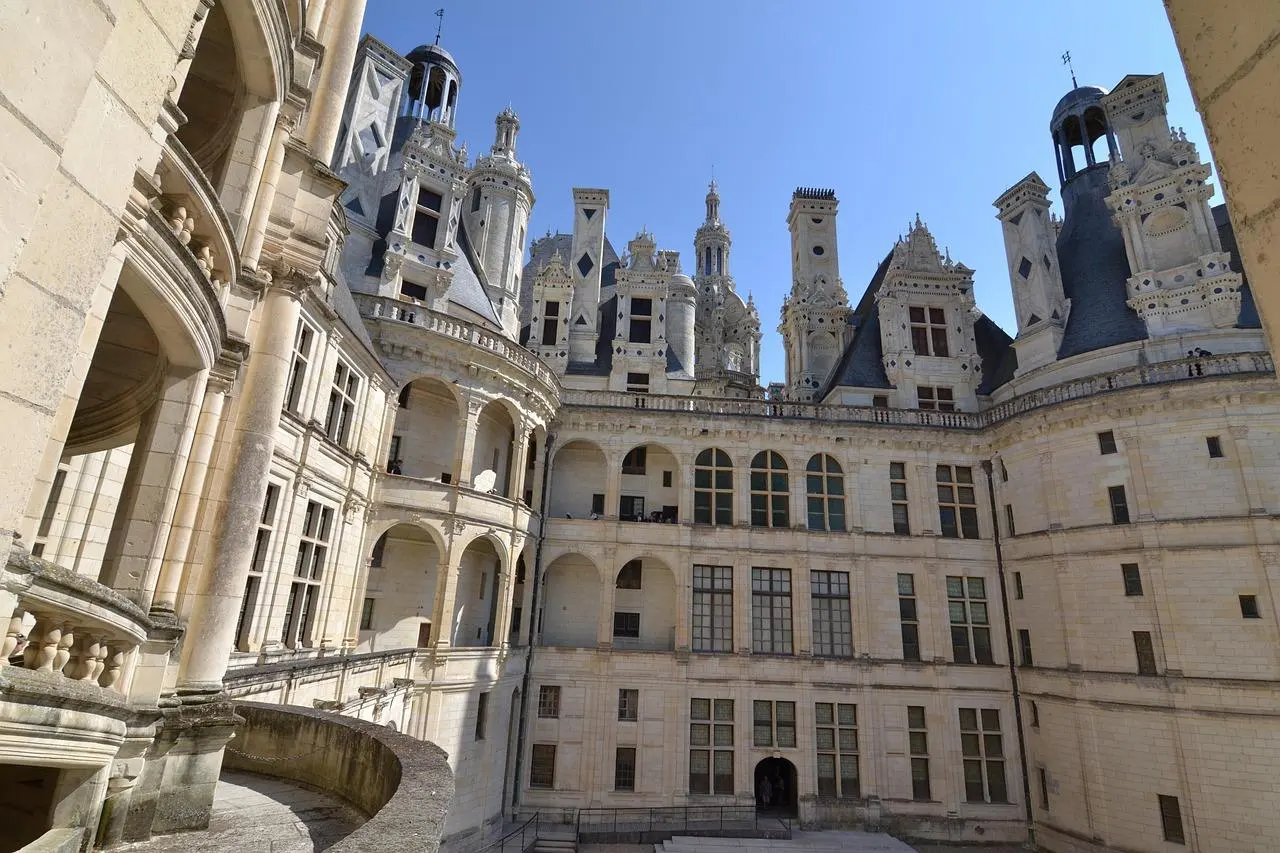
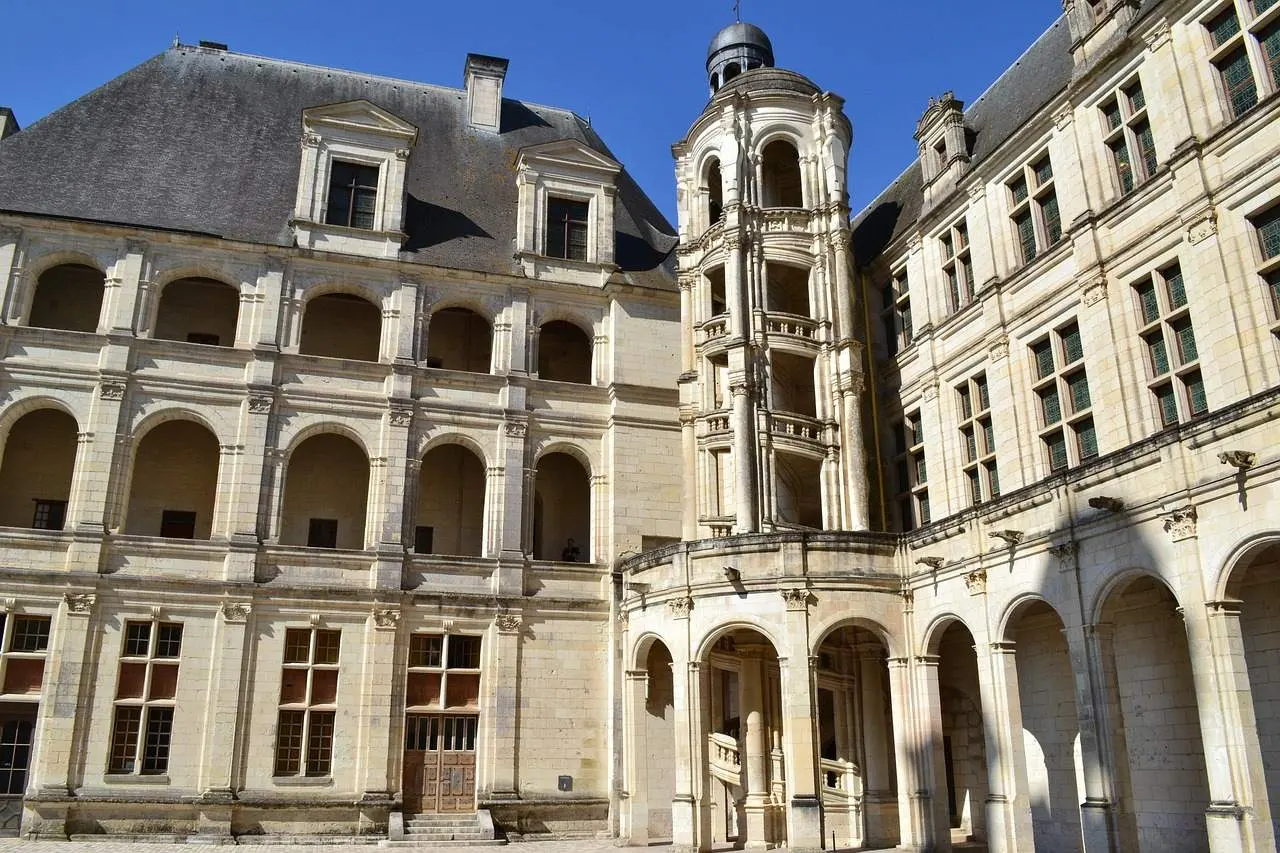
The clearest shift is from defence to comfort. According to the Touraine Val de Loire tourist board, a Renaissance château has small, harmoniously arranged windows, open, airy galleries and fine decoration instead of defensive walls.
The same page says Francis I dreamt of a kingdom in the image of the great Italian courts, where architecture was more than functional: it was art. That ambition explains why the new buildings were designed to be seen and enjoyed.
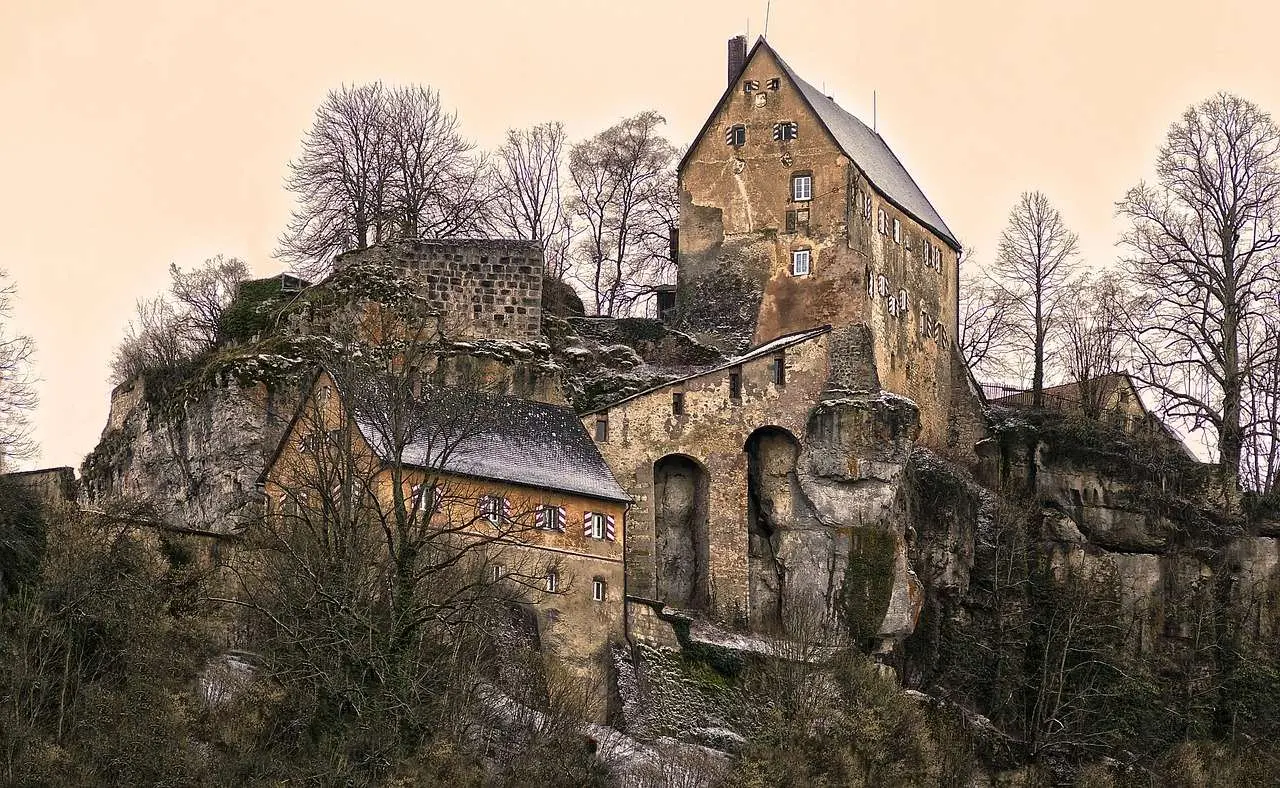
The Château de Montsoreau shows the change halfway through. Wikipedia describes its architecture as a transition between military and pleasure architecture, from the time when castles became châteaux, and notes that Charles VII authorized it in 1453 for the diplomat Jean II de Chambes.
The fortress tradition these buildings moved away from is covered in our guide to medieval french castle architecture.
Between the tourist board’s description and the history of Azay-le-Rideau, a few recognisable features keep recurring:
- Slender roofs, mullioned windows and abundant decoration.
- Wide, numerous window openings framed by horizontal and vertical lines.
- Pilasters beside the windows that stress the vertical lines of the building.
How did Italian ideas reach the Loire?
The route ran through Naples. In 1494 Charles VIII led an army into Italy, and in that city he found lavish gardens and a new architectural style that he judged far superior to his own medieval palace at Amboise, as Wikipedia recounts.
When an anti-French coalition forced him to retreat, he took home twenty-two skilled Italian craftsmen, among them gardeners, sculptors, architects and engineers. He assigned them to remake his château at Amboise.
The rebuilding of Amboise had already begun in 1491, turning a medieval castle into a more comfortable residence with two wings and a chapel. Much of the work still followed the earlier medieval style, and the first Renaissance additions were the large ground-floor bays that opened toward the Loire, according to the same Wikipedia entry.
Innovation was not confined to the valley. Between 1502 and 1509, the archbishop Georges d’Amboise largely redecorated his residence in the Seine valley, the Château de Gaillon, in the Italian style, Wikipedia notes.
Artists followed the court. France.fr records that Leonardo da Vinci arrived at Amboise in 1516, died three years later and was buried in the chapel beside the château, according to his wishes.
Two periods: copying Italy, then making it French
Historians divide the style into two distinct periods. Between about 1491 and 1540 the Italian style was copied directly, often by Italian architects and craftsmen, as Wikipedia explains.
From 1540 to the end of the Valois dynasty in 1589, French architects and craftsmen gave the style a more distinctive and original French character. The change is one of authorship as much as appearance.
The major architects of the style included the royal architects Philibert Delorme, Pierre Lescot and Jean Bullant. The Italian architect and theorist Sebastiano Serlio belongs on the same list.
Azay-le-Rideau: a Renaissance château with medieval memories
Azay-le-Rideau was built during the reign of Francis I by a rich financier, Gilles Berthelot, who wanted a home that combined the latest technical innovations from Italy with the elegance of French architecture, as France.fr puts it. Google Arts & Culture adds that he began a completely new château with his wife, Philippe Lesbahy, between 1518 and 1524.
The result is a hybrid. The château’s architecture combines medieval and Renaissance features, and it keeps machicolations, an encircling walkway, towers and turrets, steeply sloping roofs and open bays from the Middle Ages, as the same history explains.
The grand staircase is the clearest sign of change. In the Middle Ages spiral staircases stood outside the accommodation blocks, beside the towers, whereas at Azay the staircase sits inside the block and is one of the first straight staircases in France with landings, according to Google Arts & Culture.
Carved emblems add a royal signature. The salamander is the emblem of Francis I, while the ermine was the emblem of Claude of France, the daughter of Anne of Brittany and the wife of Francis I, the same source says.
Gardens and views: the building opens outward
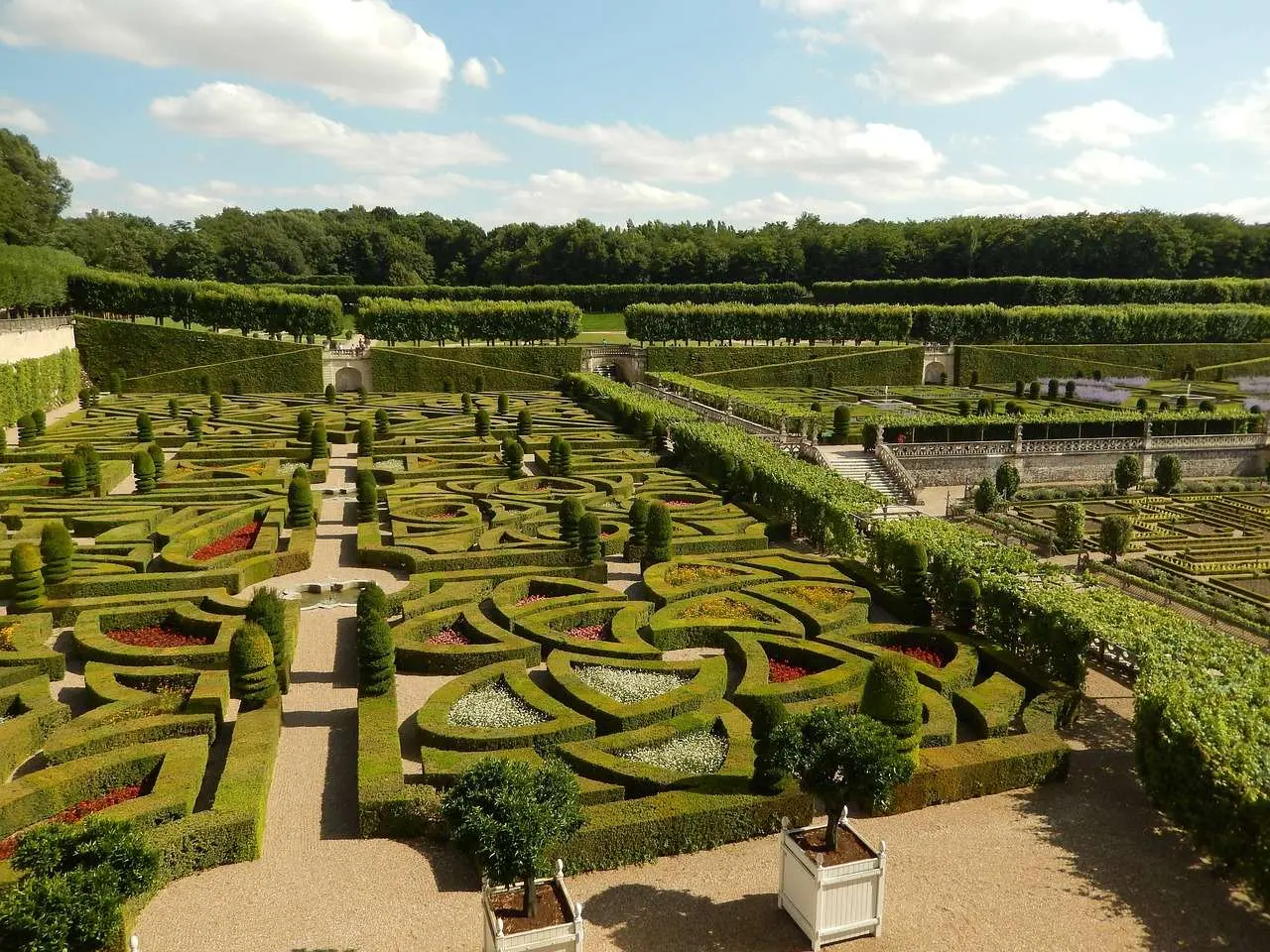
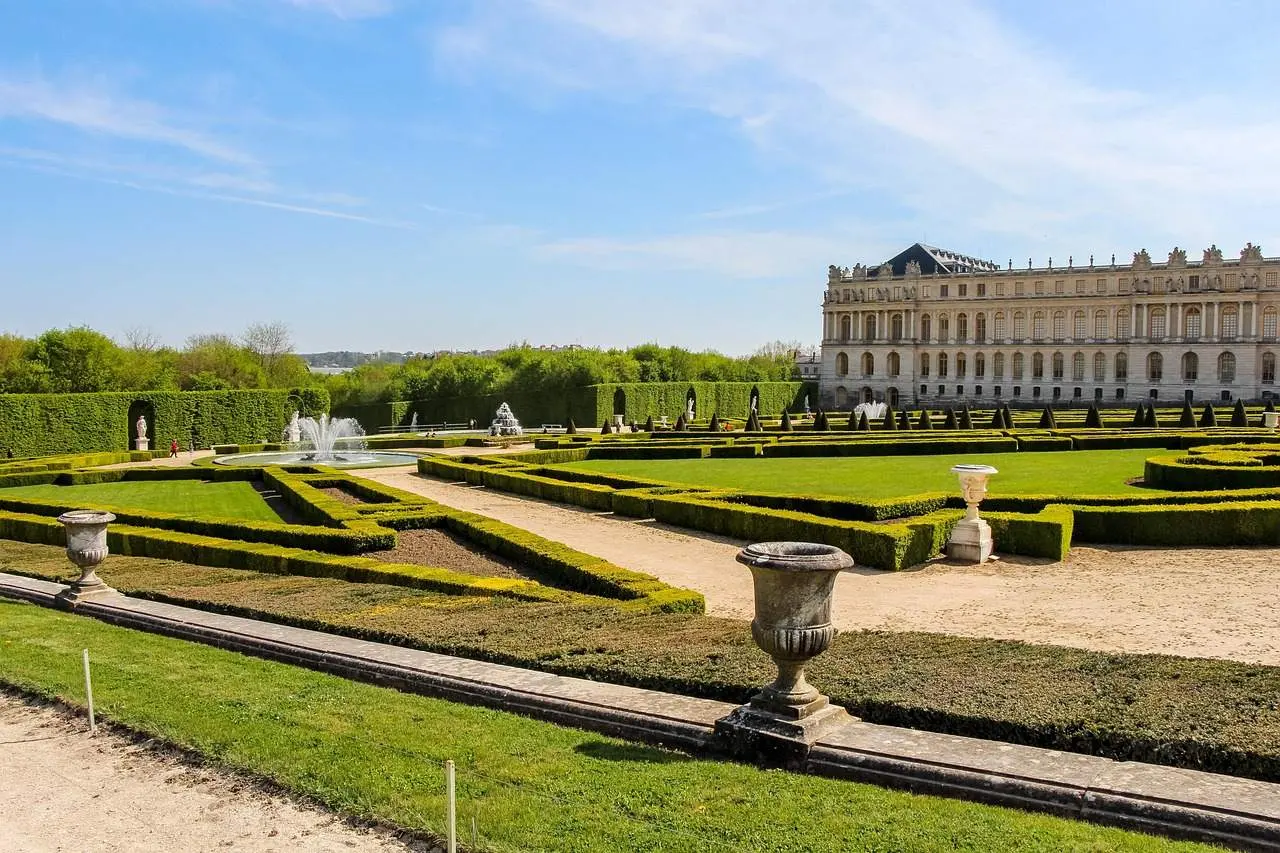
The tourist board notes that Renaissance châteaux give uninterrupted views over gardens designed as veritable outdoor living rooms, in its guide to Renaissance châteaux. The building was no longer a closed block but a place to look out from.
At Amboise, the landscape architect Pacello da Mercogliano, whom Charles VIII brought from Italy, created the first French Renaissance garden on the terrace, surrounded by a forged wrought iron fence, according to Wikipedia.
How garden design developed after these early terraces is covered in our guide to french formal gardens.
Renaissance châteaux worth knowing in the Loire Valley
Three further examples show how varied the style became, each described by a tourism source.
- Chambord: described by the Loire Valley Castles association as the emblem of the French Renaissance throughout the world.
- Chenonceau: the Touraine tourist board calls its bold architecture spanning the Cher a technical and aesthetic feat of the French Renaissance.
- Chamerolles: built between 1500 and 1530 by Lancelot du Lac, chamberlain to King Louis XII, and inspired by the Louis XII wing of the Château de Blois, according to the same association.
This guide is independent and does not handle visits or bookings, so check each château’s own information before you travel.
Frequently asked questions
What is a Renaissance château?
Show answer
It is a royal or noble residence in which comfort and ornament outrank defence. Pilasters, galleries and straight staircases of Italian inspiration usually mark it out.
Why are so many of them in the Loire Valley?
Show answer
During the Hundred Years’ War, Charles VII found the Loire Valley an ideal place of refuge. The great figures of the kingdom then settled there, either fitting out medieval fortresses or putting up new buildings, Wikipedia explains.
Is Fontainebleau a Loire château?
Show answer
No. Wikipedia lists the Château de Fontainebleau among the notable royal châteaux of the style that stand closer to Paris than the Loire group.