Standing at a gate and wondering what you are looking at? Medieval french castle architecture grew from wooden mound castles into stone keeps, moats and ramparts built to survive sieges, and each feature had a defensive job.
This guide is part of the wider story of french castle history, and it looks at the buildings rather than the dynasties behind them.
| Item | Value |
|---|---|
| Height of the keep at Vincennes | 52 meters (172 feet) |
| Vincennes keep completed | 1369-70 |
| Deep moat dug at Vincennes | 1367 |
| First motte-and-bailey castle, at Vincy | 979 |
| Typical build time of a stone keep | a decade or more |
The figures come from Wikipedia’s Château de Vincennes page and Wikipedia’s page on keeps. They can change as research is revised, so check the sources before you rely on them.
From wooden mottes to stone castles
The first castles were not the stone towers most visitors picture. In the ninth and 10th centuries, castles across Christian Europe were generally wooden structures on artificial mounds that, after the Norman conquest, were called mottes, according to National Geographic.
The Wikipedia entry on keeps ties the earliest keeps to motte-and-bailey castles from the 10th century onwards. Documentary and archaeological evidence places the first such castle, built at Vincy, in 979.
The mound was not the only defence. The earth dug out to form the moat was piled into embankments topped with a wooden palisade, and a wooden drawbridge gave access across the moat, as National Geographic describes.
Stone replaced timber gradually. The stone castles we now think of as typically medieval appeared from the 11th and 12th centuries onward, and the main impetus was changing warfare, because most campaigns centred on controlling fortresses, per National Geographic.
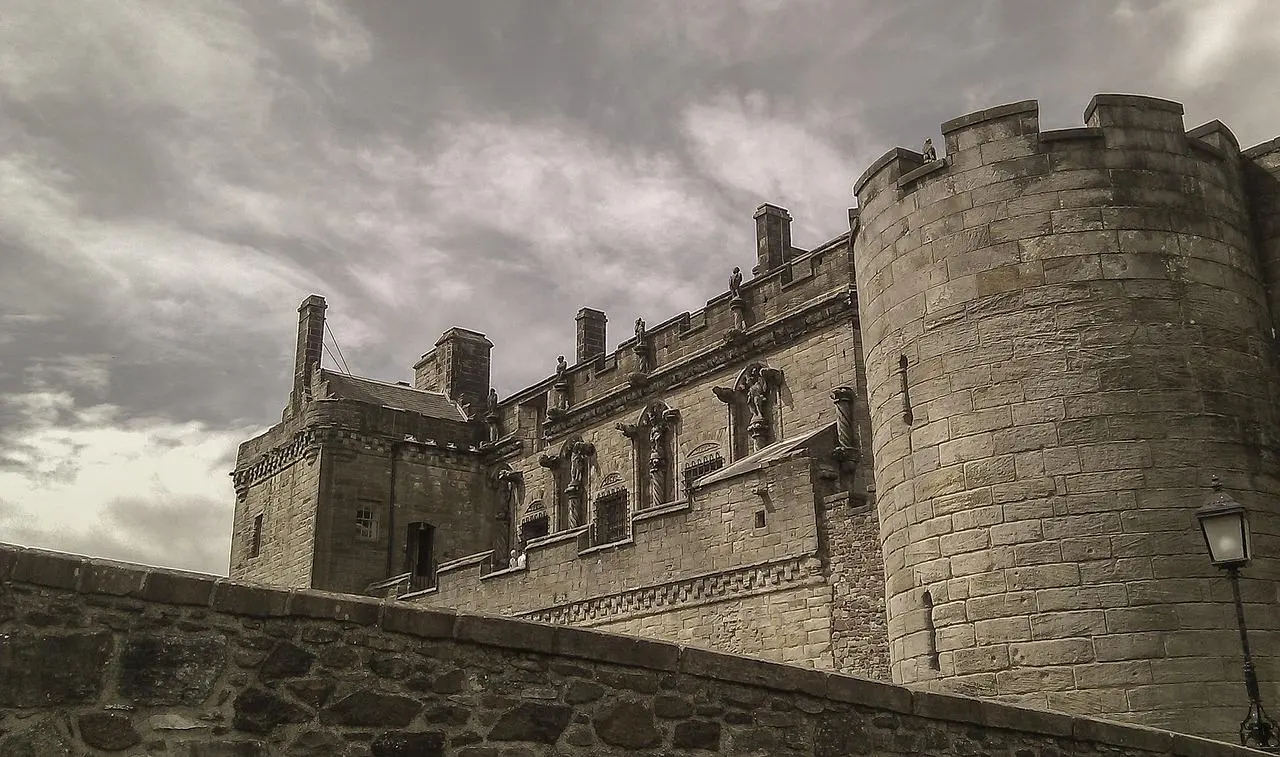
The keep, or donjon, at the heart of the castle
A keep is a fortified tower built inside a castle during the Middle Ages. Wikipedia notes that scholars usually mean large towers that were fortified residences, used as a refuge of last resort should the rest of the castle fall.
The wooden forts on the mottes were soon replaced by large, usually square, stone towers. National Geographic adds that this central tower was a keep in English, a donjon in French, a bergfried in German and a maschio in Italian.
The 12th-century French came to call these towers a donjon, from the Latin dominarium, meaning lordship, which linked the building to feudal authority. Stone keeps carried political as well as military importance and could take a decade or more to build, according to Wikipedia.
Shapes changed over time. During the 12th century, French builders introduced quatrefoil-shaped keeps, and by the end of that century Philip II of France was building a sequence of circular keeps to stamp his royal authority on new territories, says Wikipedia.
A surviving square example is the keep of Arques, which at 82 feet tall rises over the countryside near Carcassonne in southwest France, as National Geographic notes.
If the words keep, castle and chateau start to blur, the guide to chateau vs castle is a useful companion.
Choosing a site and digging the moat
Before any stone was laid, the builder had to pick a site. According to National Geographic, the place had to command the surrounding area, especially roads, bridges and fords, while also offering access to agricultural and other resources.
Water mattered as much as height. Builders weighed the supply for filling wells, pools and cisterns, because defenders needed to stockpile enough food and water to hold out through a prolonged siege (National Geographic).
A large enough moat made it difficult for the enemy to get close to the walls with projectiles or battering rams. In dry, rocky places moats were usually dry, narrow and deep, while in temperate climes and flat, claylike ground builders dug wide, shallow moats and flooded them, as the same National Geographic article explains.
Castelnaud, above the Dordogne River, shows a castle tied to its landscape. It was destroyed in the wars between Catholics and the Cathar group, rebuilt in its current form in the 1200s, and then fought over repeatedly in the Hundred Years’ War, National Geographic reports.
Walls, gateways and the words to know
Castle design began to incorporate a series of concentric defensive walls, and at the center the old keep was enlarged into a last defensive stronghold, as National Geographic puts it.
A glossary from France Travel Planner helps decode what you see on a visit:
- Curtain: a castle wall enclosing a courtyard. The enceinte is the enclosing wall, usually exterior.
- Crenellation: a notched battlement of alternating openings (crenels) and square saw-teeth (merlons).
- Barbican: an extension of a gateway enclosing an open area where attackers who broke through the outermost gate could be trapped.
- Drawbridge: a wooden bridge leading to a gateway, able to be raised or lowered.
- Portcullis: a vertical sliding wooden grill shod with iron, let down to protect the gate.
- Forebuilding: a projection in front of a keep, containing the stairs to the main entrance.
The same glossary makes the underlying point: every aspect of the architecture of these buildings was designed to promote victory in military conflict.
Vincennes: a royal keep built for security
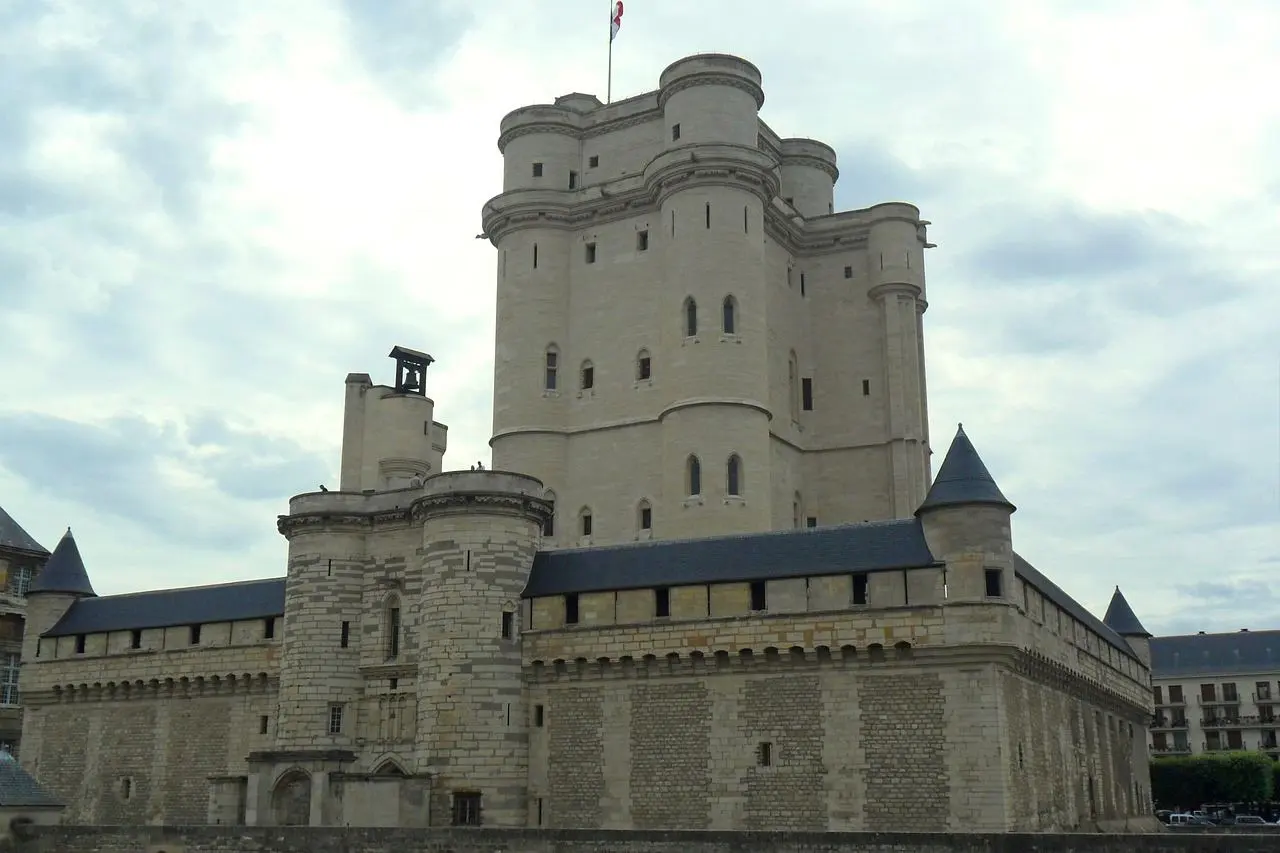
Vincennes shows several of these ideas at once. Wikipedia says the defeats of the French and the capture of the king by the English in the Hundred Years’ War, along with a Parisian merchants’ uprising and a rural revolt, persuaded John II and his son, the future Charles V, that they needed a more secure residence close to, but not in the center of Paris.
The king ordered a fortress with high walls and towers around a massive keep, 52 meters (172 feet) high. When it was completed in 1369-70, it was the tallest fortified structure in Europe, as Wikipedia records.
The deep moat was dug in 1367, the fortified gateway followed in 1369, and the walls and towers around the keep were finished in 1371-72, according to the same page. At the end of 1372, Charles V began another, larger wall with towers to contain additional buildings.
Because of its fortifications, the château was often used as a royal sanctuary in times of trouble, and also as a prison and military headquarters (Wikipedia).
The influence spread. In the second half of the 14th century keeps saw a resurgence, and the Vincennes keep began a fashion in France for tall, heavily machicolated fortifications that let defenders target enemies directly below, says Wikipedia.
Why did keeps fall out of fashion?
By the 15th century, improved artillery had compromised the protective function of keeps. By the 16th century they were slowly falling out of fashion as fortifications and residences, and many were destroyed in civil wars between the 17th and 18th centuries, according to Wikipedia.
Interest returned in the 19th century, when a number of keeps in England and France were restored or redesigned by Gothic architects, the same page notes. The architecture that followed is covered in the guide to french renaissance chateaux.
Frequently asked questions
Is a donjon the same as a keep?
Show answer
Yes, in everyday use. The France Travel Planner glossary lists donjon as the inner stronghold of a castle, the same as a keep, though most modern historians warn against using the word keep simplistically.
What is a machicolation?
Show answer
It is a projection in the battlements of a wall with openings through which missiles could be dropped on besiegers. Look for it near the top of towers and walls.
What is a postern?
Show answer
A postern, also called a sally port, is a small gate or door in a castle wall. Soldiers could slip out through it to stage quick attacks on besiegers.
What is a meurtrière?
Show answer
The French term for an arrow loop: a slit in a battlement or wall that allowed archers to shoot, or defenders to observe, while staying protected.