Puzzled by a donjon or machicolation on a chateau sign? These castle architecture terms are simpler than they look: a donjon is the keep, and the rest name the walls, gates and living rooms around it.
This glossary belongs to the wider story of french castle history, and each term below is tied to a defensive or domestic job.
| Term or event | Key fact |
|---|---|
| Donjon (keep) | The inner stronghold of a castle |
| Machicolation | A projection in the battlements with openings for dropping missiles |
| First documented motte-and-bailey castle | Vincy, built in 979 |
| Quatrefoil-shaped keeps in France | Introduced in the 12th century |
| Tall, heavily machicolated keeps (Vincennes) | Fashion begun in the second half of the 14th century |
Definitions come from the Castle & Siege Terminology list and dates from Wikipedia’s keep article. Scholarly dating and wording can change, so check the sources before you rely on these figures.
Walls and battlements: the defensive skyline
The curtain wall is a defensive enclosure wall, often connecting one tower with another, as the Herefordshire Through Time glossary describes it. The wall around the whole site is the enceinte, an enclosing wall that is usually exterior, according to the Castle & Siege Terminology list.
Along the top of that wall, a handful of terms describe how defenders stood and fought:
- Parapet: the protective wall at the top of a fortification, on the outer side of the wall-walk.
- Crenellation: a notched battlement of alternating crenels (openings) and merlons (square saw-teeth).
- Machicolation: a projection in the battlements with openings through which missiles could be dropped on besiegers.
- Hoarding: a temporary wooden balcony suspended from the tops of walls and towers before a battle.
- Arrow loop: a narrow vertical slit cut into a wall for firing arrows; a meurtriere is the same idea, and may also serve for observation.
- Bartizan: an overhanging corner turret.
- Corbel: a stone or timber bracket supporting a projection from a wall.
The two overhanging defences are easy to confuse. A hoarding was timber put up for the occasion, while a machicolation is part of the wall’s own battlements; both let defenders drop or fire missiles toward the base of the wall, per the olemiss list.
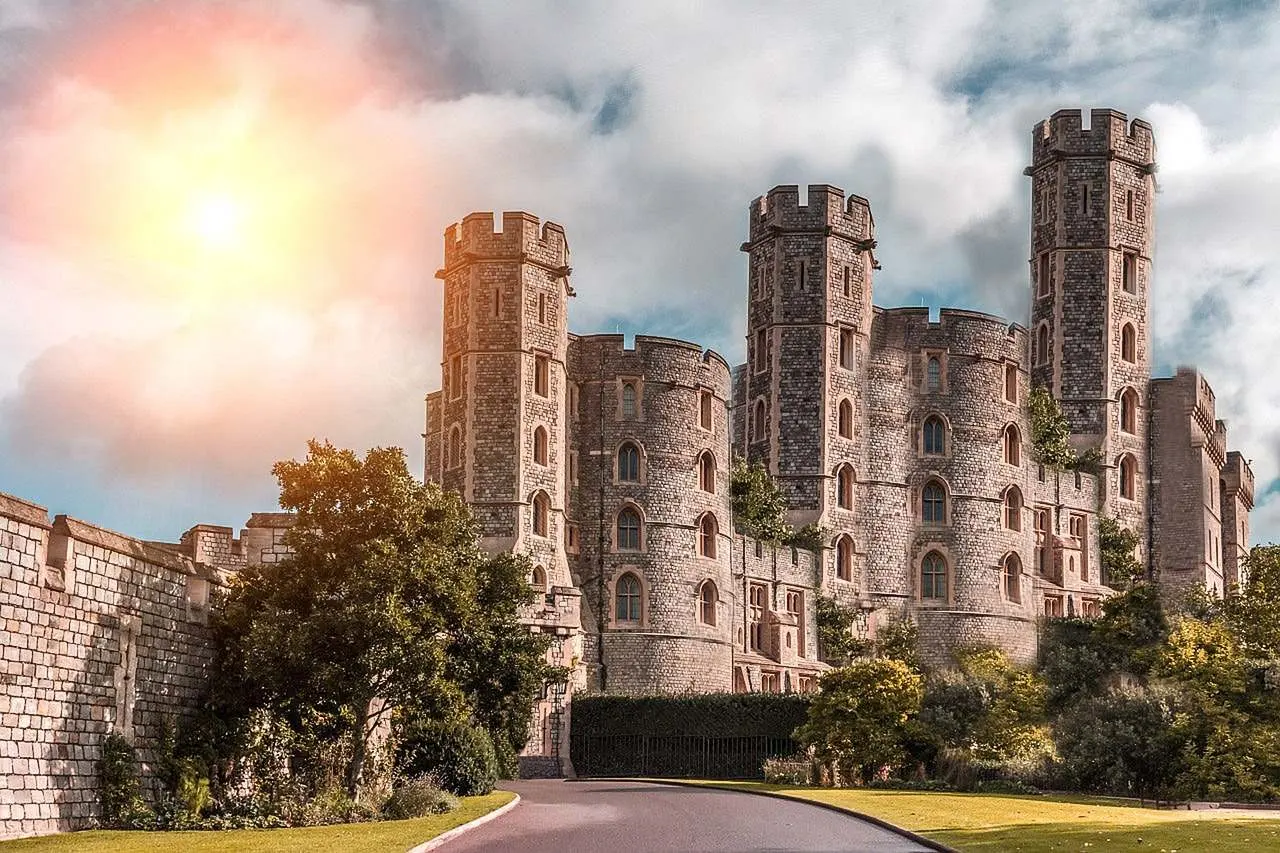
Donjon and keep: the tower of last resort
A keep is a type of fortified tower built within castles during the Middle Ages by European nobility, says Wikipedia. Scholars usually treat it as a large tower that served as a fortified residence and as a refuge of last resort should the rest of the castle fall.
The French word is donjon. French speakers of the 12th century came to use it, from the Latin dominarium (“lordship”), which tied the building to the idea of feudal authority, according to Wikipedia.
English took the same word and turned it into dungeon, which at first meant a keep rather than a prison, as the same keep article explains. A forebuilding is the projection in front of a keep that holds the stairs to the main entrance, as the olemiss glossary defines it.
These towers were serious projects: Wikipedia notes that stone keeps carried political as well as military importance and could take a decade or more to build.
How did the donjon change over the centuries?
The earliest keeps belonged to motte-and-bailey castles. Wikipedia cites documentary and archaeological evidence that places the first such castle at Vincy in 979.
French designs then diverged from English ones. In the 12th century, quatrefoil-shaped keeps appeared in France, and Philip II later built a sequence of circular keeps to stamp royal authority on his new territories, as this account records.
Tall towers returned to fashion in the second half of the 14th century. The keep at Vincennes near Paris began a taste for tall, heavily machicolated fortifications that let defenders target enemies directly below, per Wikipedia.
Gunpowder then undermined the idea. In the 15th century, improved artillery compromised the protective function of keeps, and in 1464 bombards defeated the keep of Bamburgh Castle in England, according to the same article.
Gates, moats and courtyards
Entrances gathered some of the most specialised vocabulary in a castle:
- Gatehouse: the complex of towers, bridges and barriers built to protect each entrance through a castle or town wall.
- Barbican: an outwork, or forward extension, of a castle gateway.
- Portcullis: a vertical sliding wooden grille shod with iron, let down in front of a gateway to protect the gate.
- Drawbridge: a wooden bridge over a moat that can be raised towards a gateway by chains and ropes, as described by Herefordshire Through Time.
- Murder holes: holes or slots between the main gate and an inner portcullis, where arrows, rocks and hot oil could be dropped on attackers, per the Castles of Wales glossary.
- Postern: a secondary gate or door, often at the rear of the castle.
The moat is a deep trench dug around a castle to prevent access from the surrounding land. It could be left dry or filled with water, according to the olemiss list.
Inside the walls, the vocabulary shifts to open ground:
- Motte: an earthwork mound on which a castle was built.
- Bailey (also ward): the defended open court of a castle, often separated from the mound by a ditch, as Herefordshire Through Time puts it.
- Palisade: a sturdy wooden fence built to enclose a site until a permanent stone wall could go up.
- Chemise: the inner walled enclosure of a castle, a term defined on the olemiss page.
Halls, chambers and everyday rooms
Defence is only half the vocabulary. The great hall was the building in the inner ward that housed the main meeting and dining area for the castle’s residents, per the olemiss glossary.
- Solar: originally a room above ground level, but commonly the great chamber or a private sitting room off the great hall.
- Screens: a wooden partition at the kitchen end of a hall, shielding a passage to the buttery, pantry and kitchen.
- Oriel: a projecting room on an upper floor, later an upper-floor bay window, according to the Castles of Wales glossary.
- Garderobe: a small latrine set inside the wall’s thickness or projecting from it.
Reading a chateau with this vocabulary
What you see on a visit may not be wholly medieval. Wikipedia reports that keeps became fashionable again in the 19th century, and that in England and France a number were restored or redesigned by Gothic architects.
Treat the word keep with some care too. Most modern historians warn against using it simplistically, and some academics prefer donjon, according to the same source.
The terms above also overlap with the question of whether a building is a fortress or a residence, which the guide to chateau vs castle sets out. For what happened to such buildings in a period of upheaval, there is a separate guide to french revolution chateaux.
Frequently asked questions
Is a donjon the same thing as a keep?
Show answer
In most contexts, yes: donjon is the French word for the great tower, and keep is the English one. Historians increasingly favour donjon because keep can mislead, according to Wikipedia.
What separates a hoarding from a machicolation?
Show answer
Material and permanence. A hoarding is a covered wooden gallery added to the outside of a tower or curtain, while a machicolation projects from the battlements themselves and has openings in it, according to the Castles of Wales glossary.
Why does dungeon not mean the same as donjon?
Show answer
The two words share a root, and the prison meaning grew out of the tower. The Castles of Wales glossary now defines a dungeon as a jail or place of imprisonment, and an oubliette as a dungeon reached by a trap door.
What is a garderobe?
Show answer
It is the medieval toilet. Usually a plain hole, it emptied to the outside into a cesspit or the moat, as the Castles of Wales glossary explains.